Cart
Your cart is empty

Size is the criterion that decides everything: a well-fitted chastity cage is forgotten, a poorly sized cage comes off within the hour. The good news is that finding the right size takes neither special equipment nor experience: a piece of string, a ruler and ten minutes are enough. This size guide explains how to measure the ring and the cage length, how to read the dimensions on a product page, and what to do when you are torn between two sizes.
Material, design and locking system all matter, but none of them makes up for the wrong size. Three things depend directly on the fit:
Comfort: a suitable ring does not pinch or rub and can be worn for several hours, then several days.
The security of the device: a cage that is too big lets the penis slip out without the key, which is known as "slippage".
Health: a ring that is too tight restricts blood flow. The right equipment, in the right size, removes that risk.
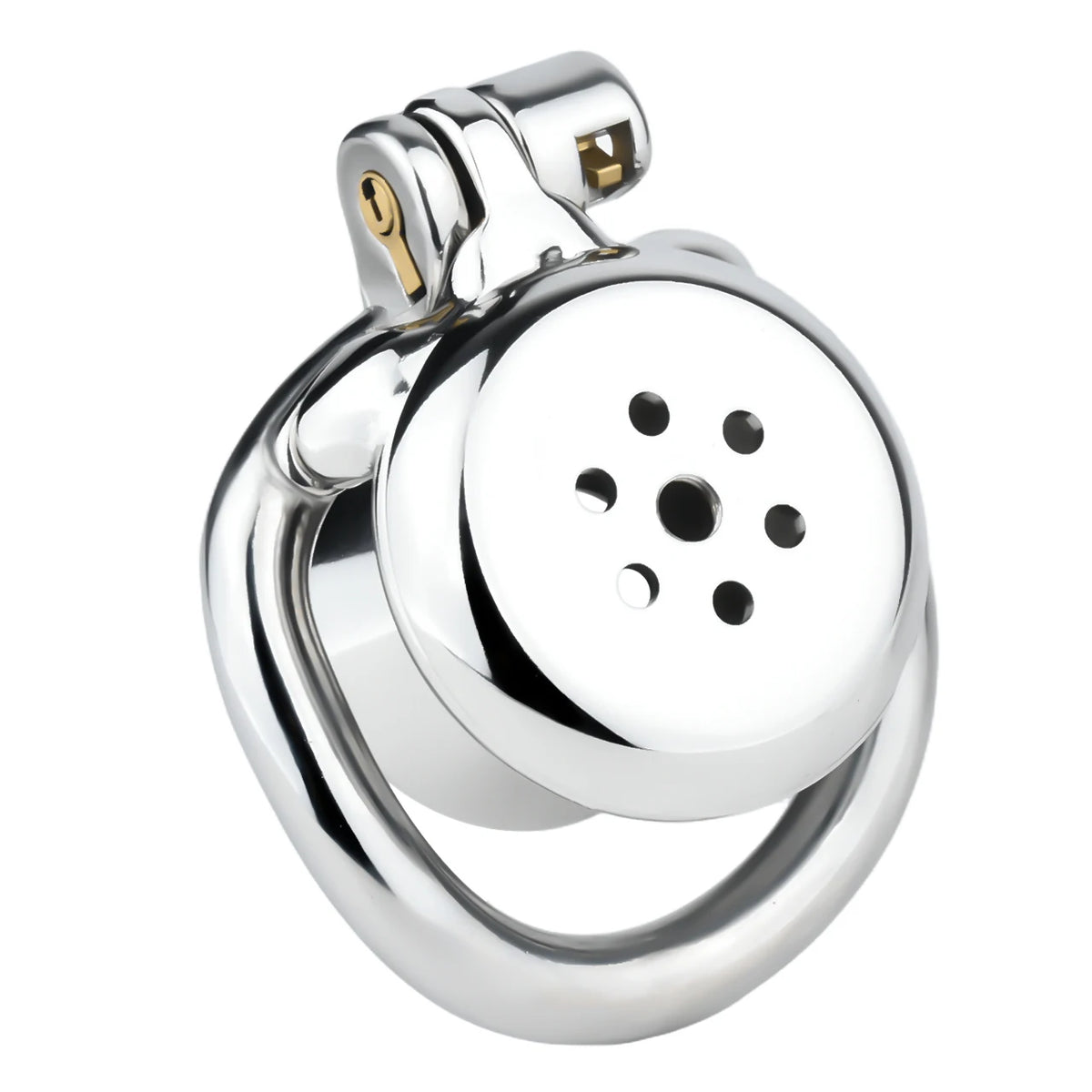
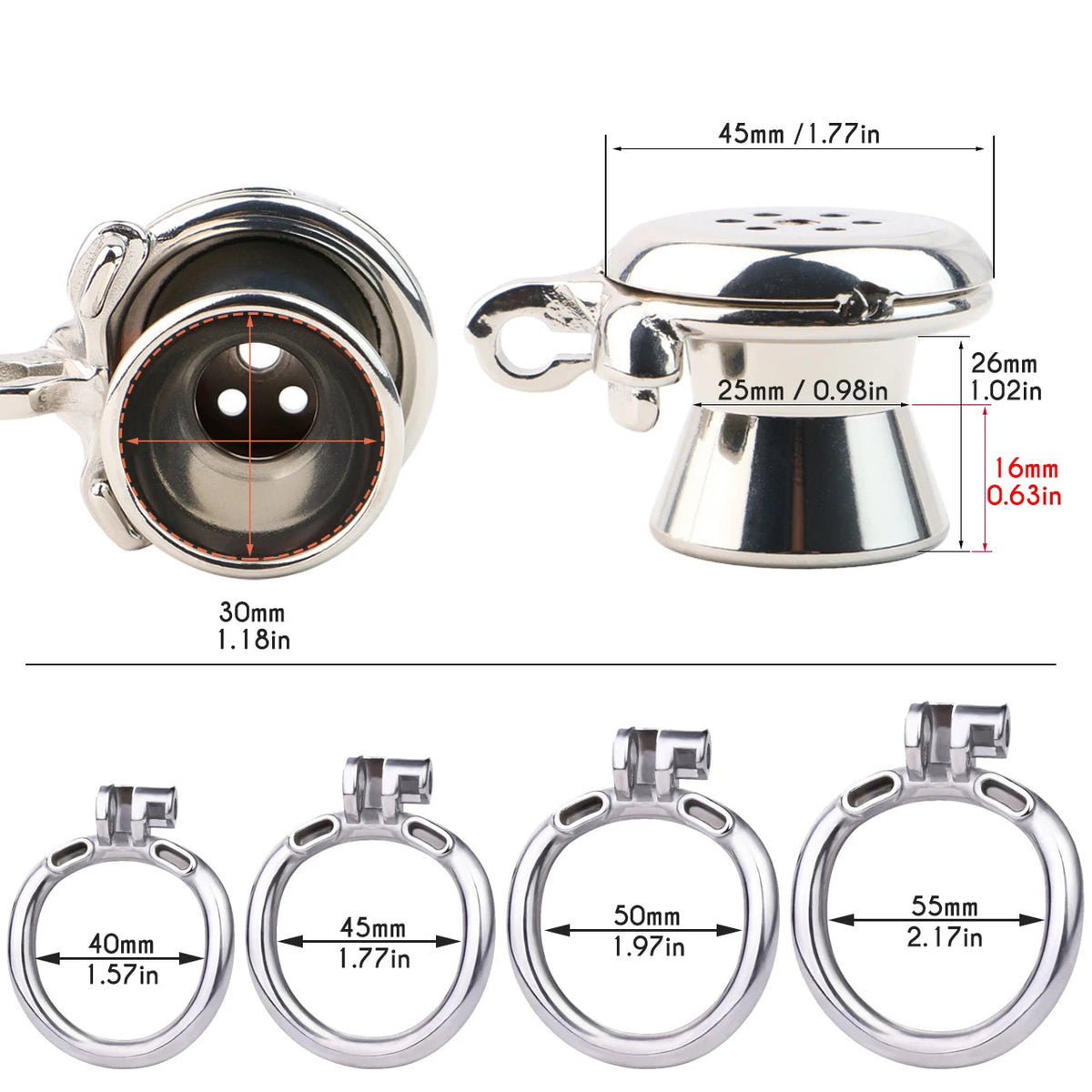
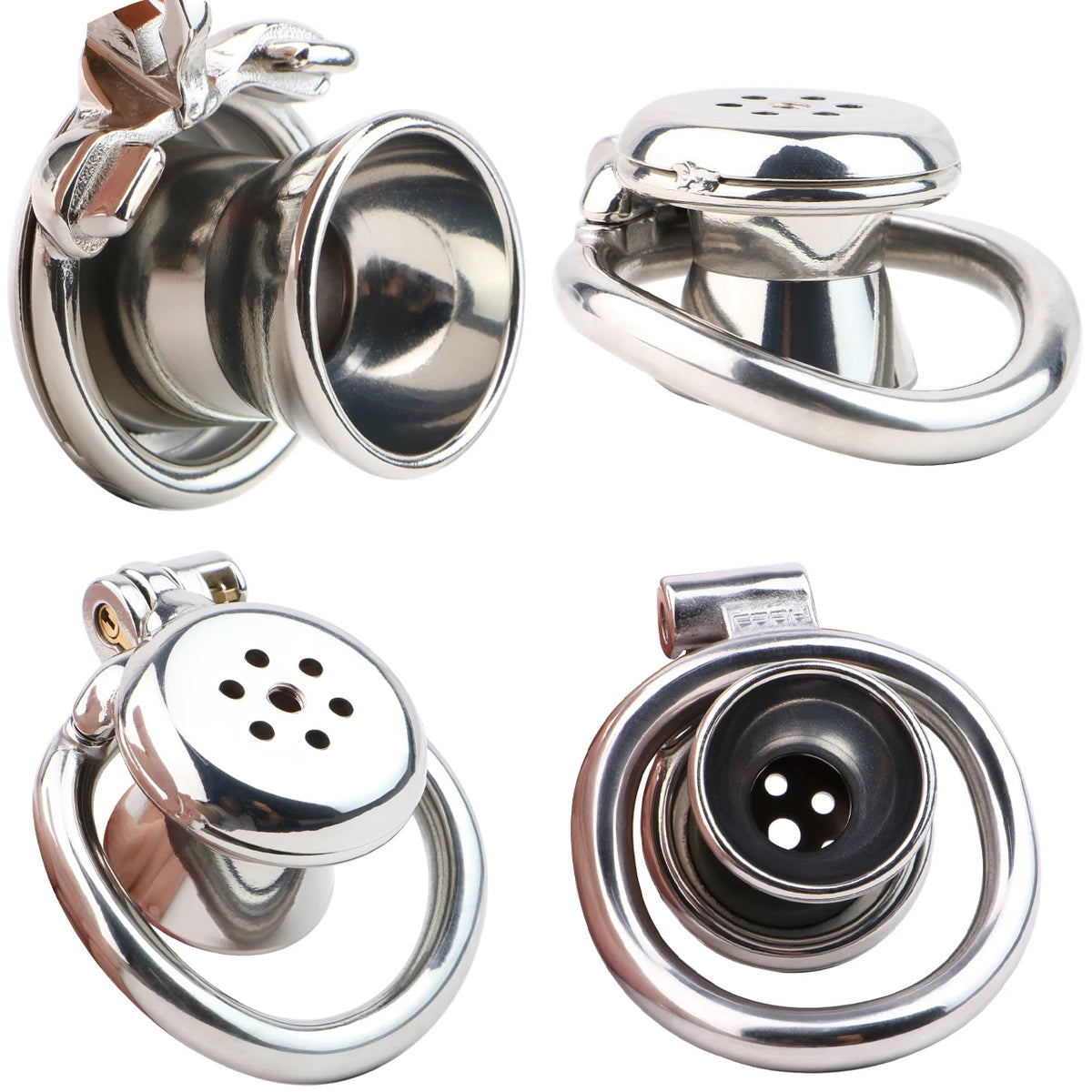
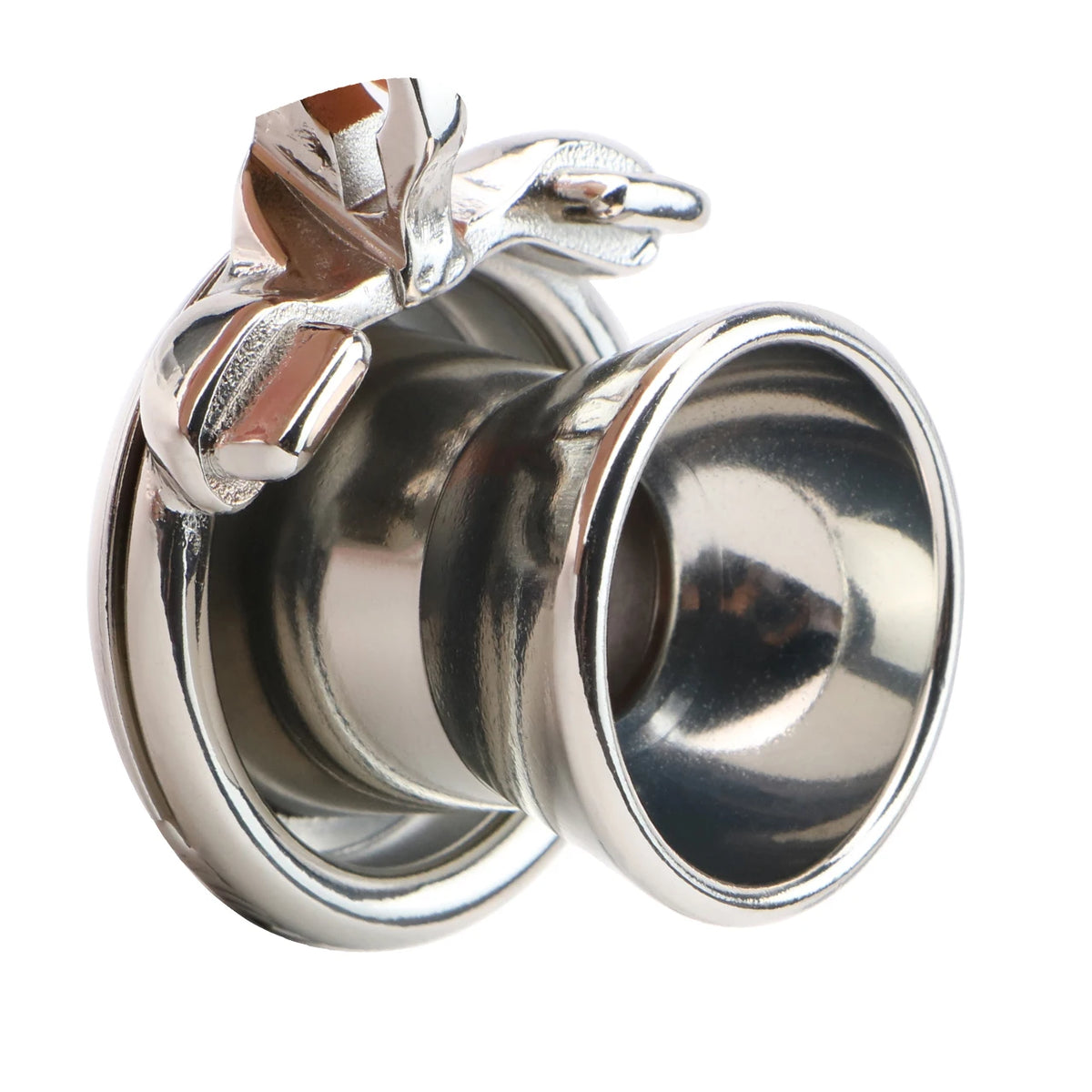
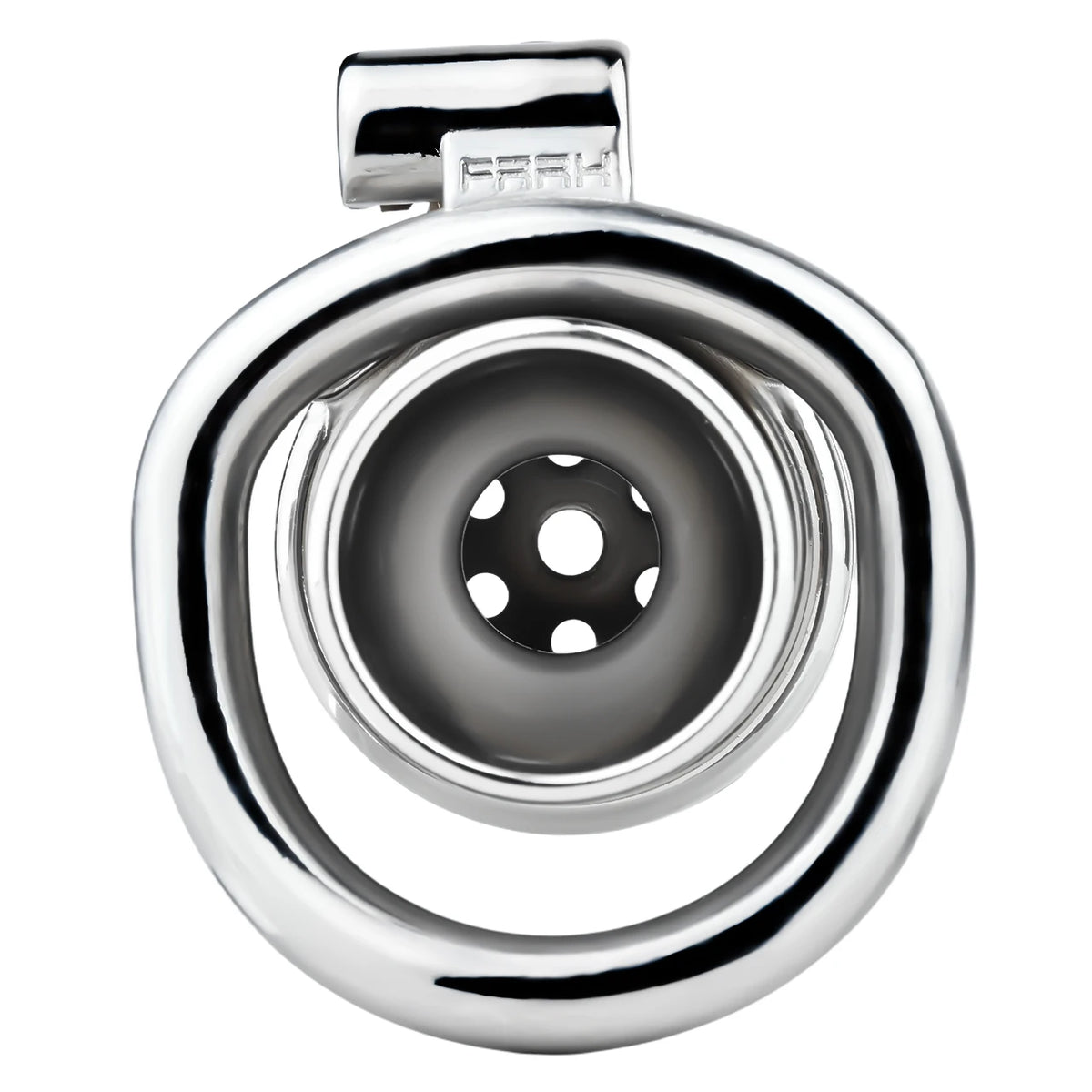
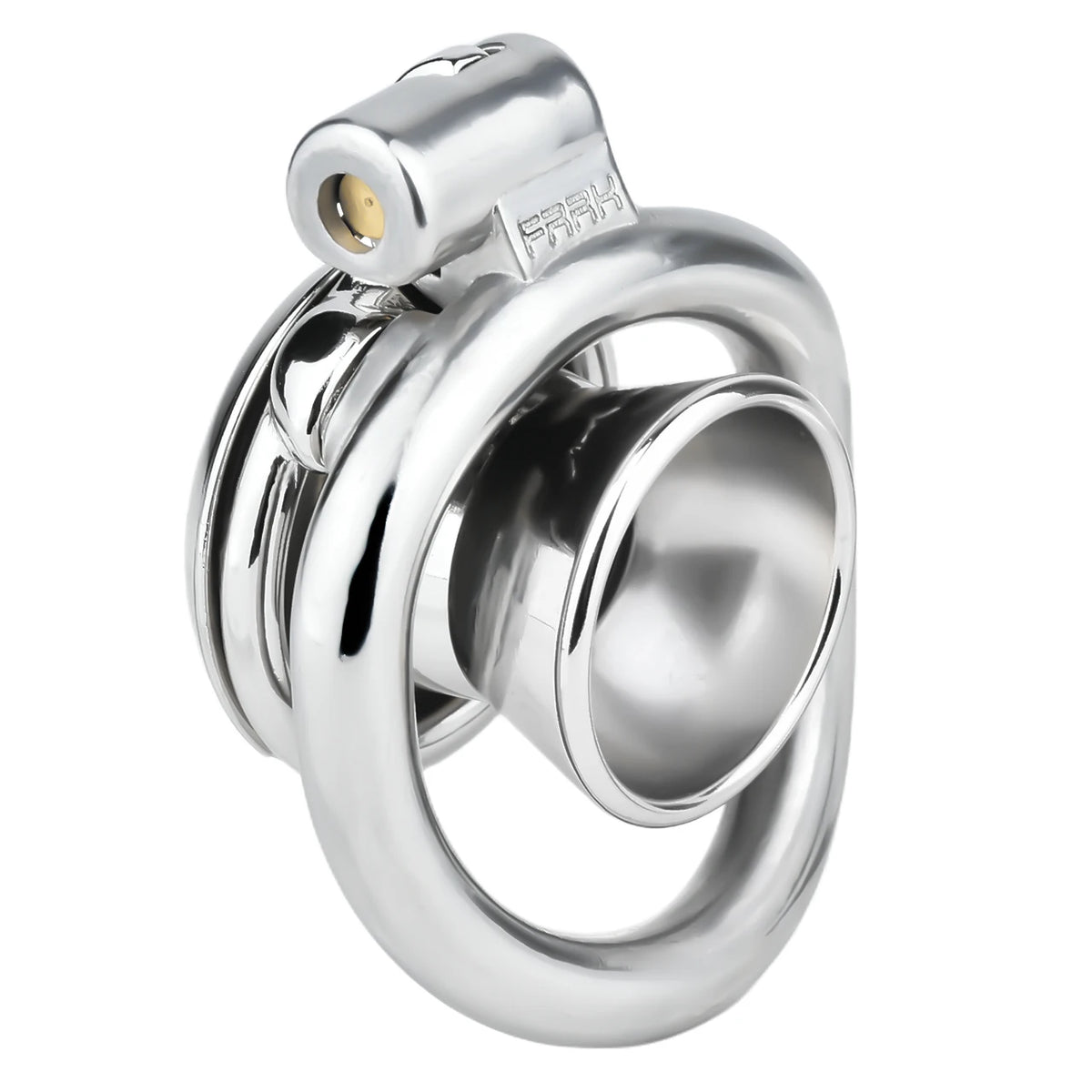
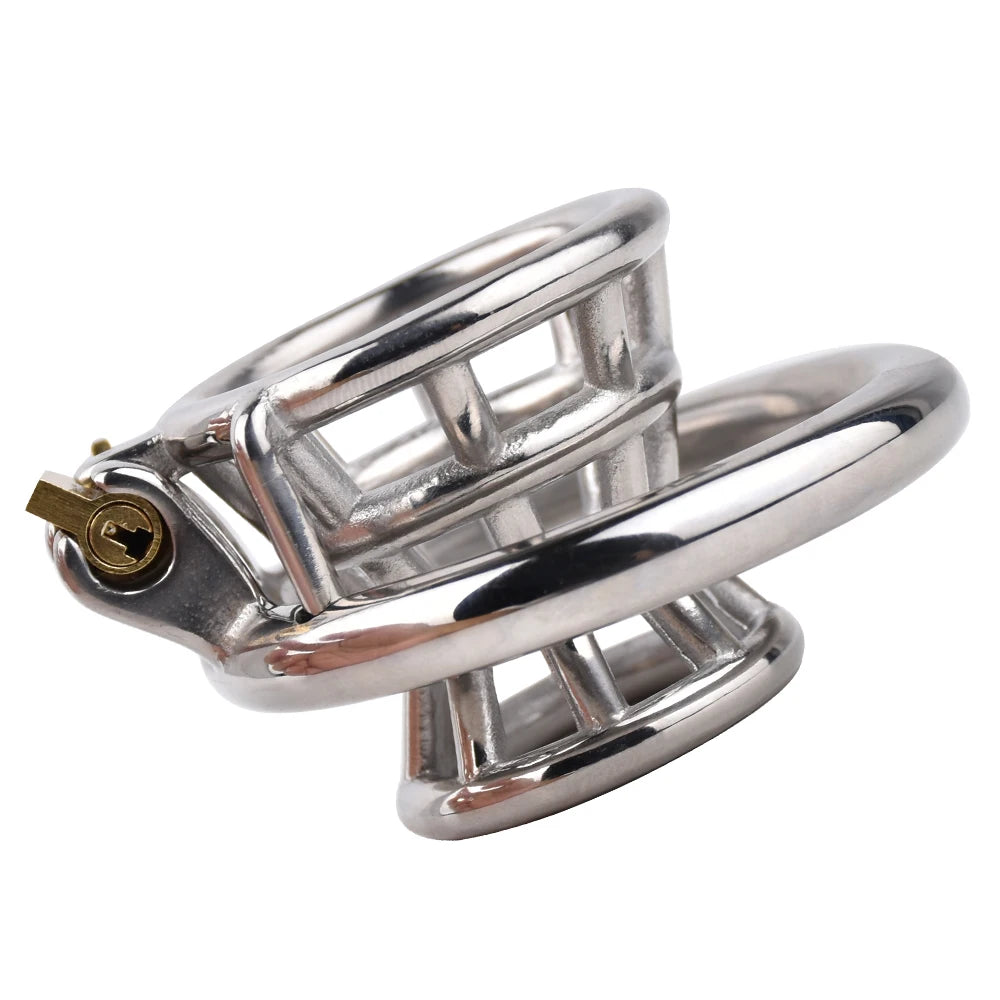
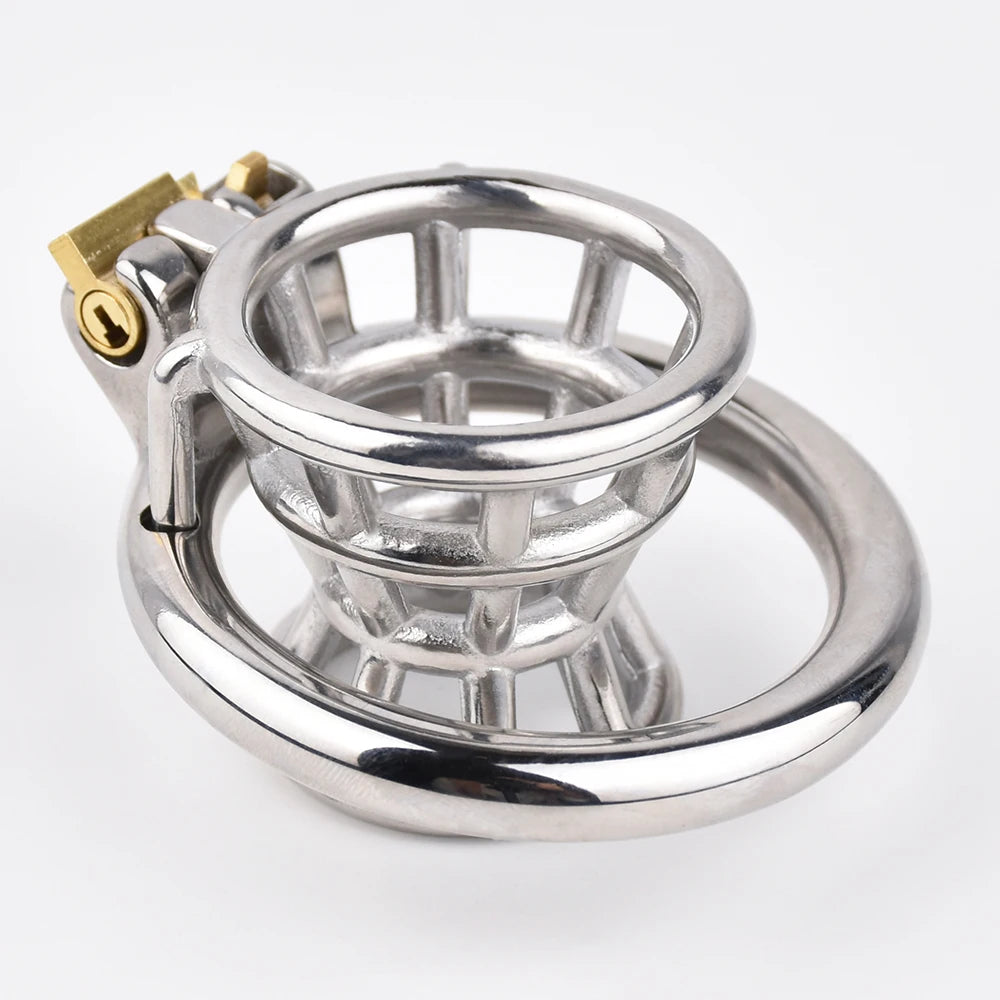
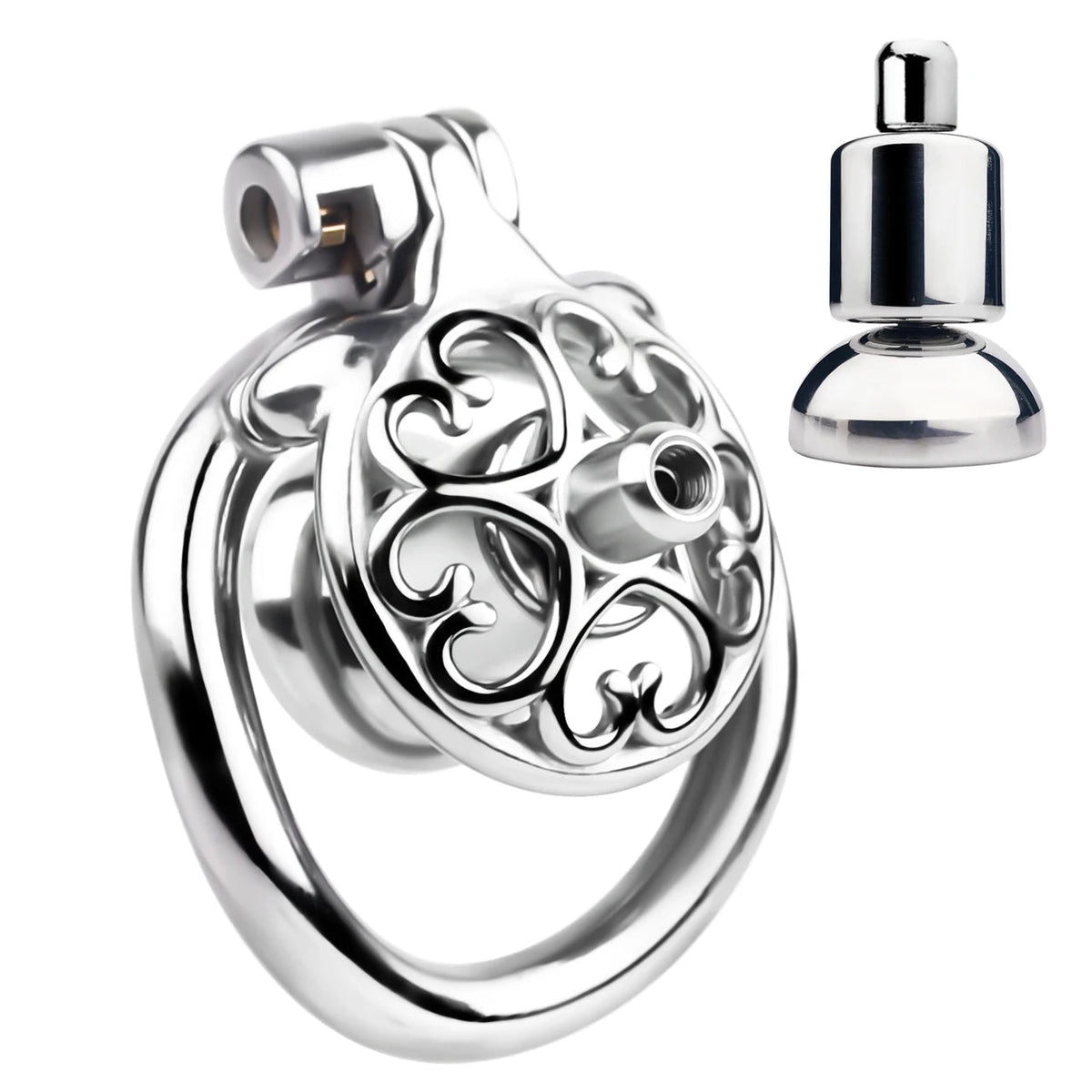
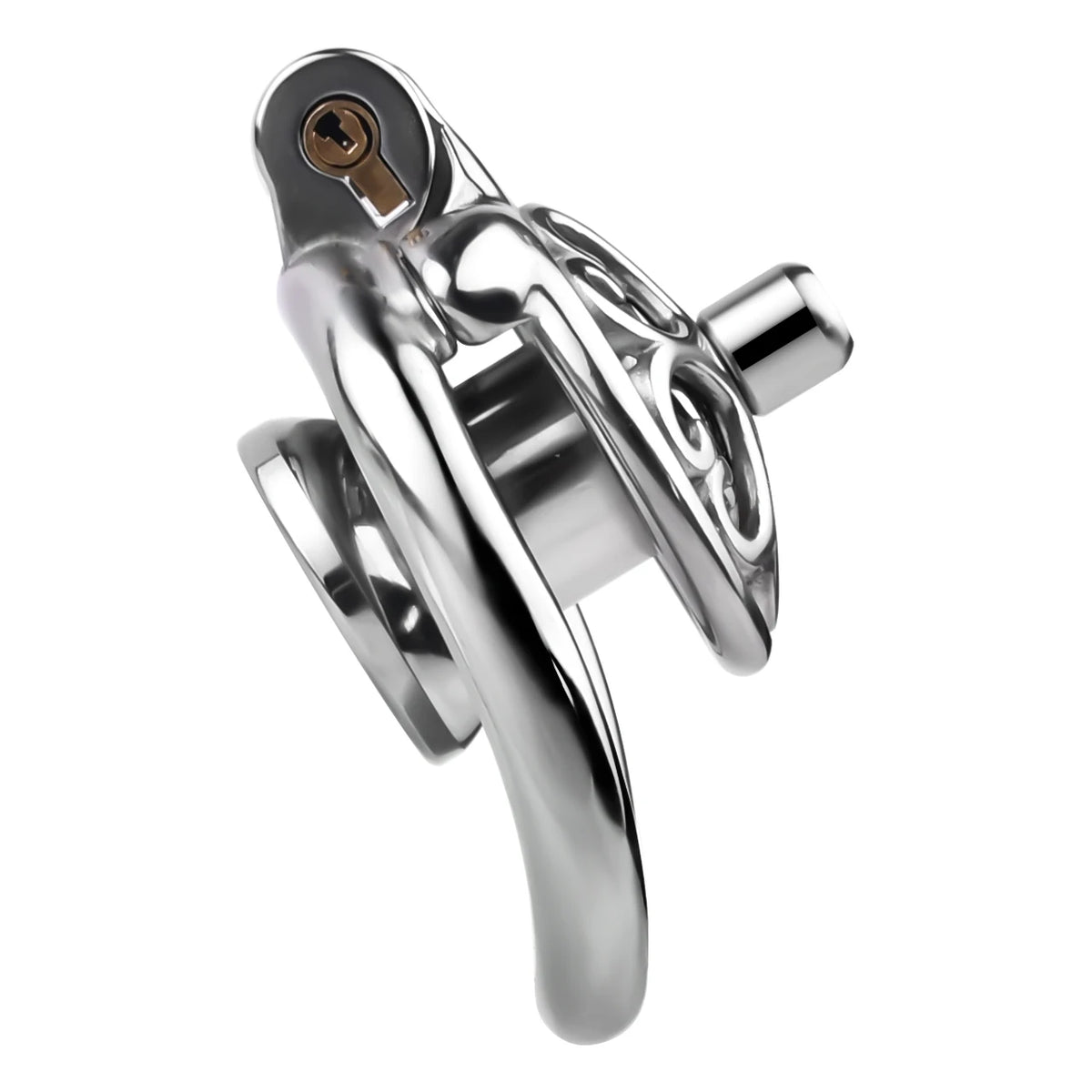
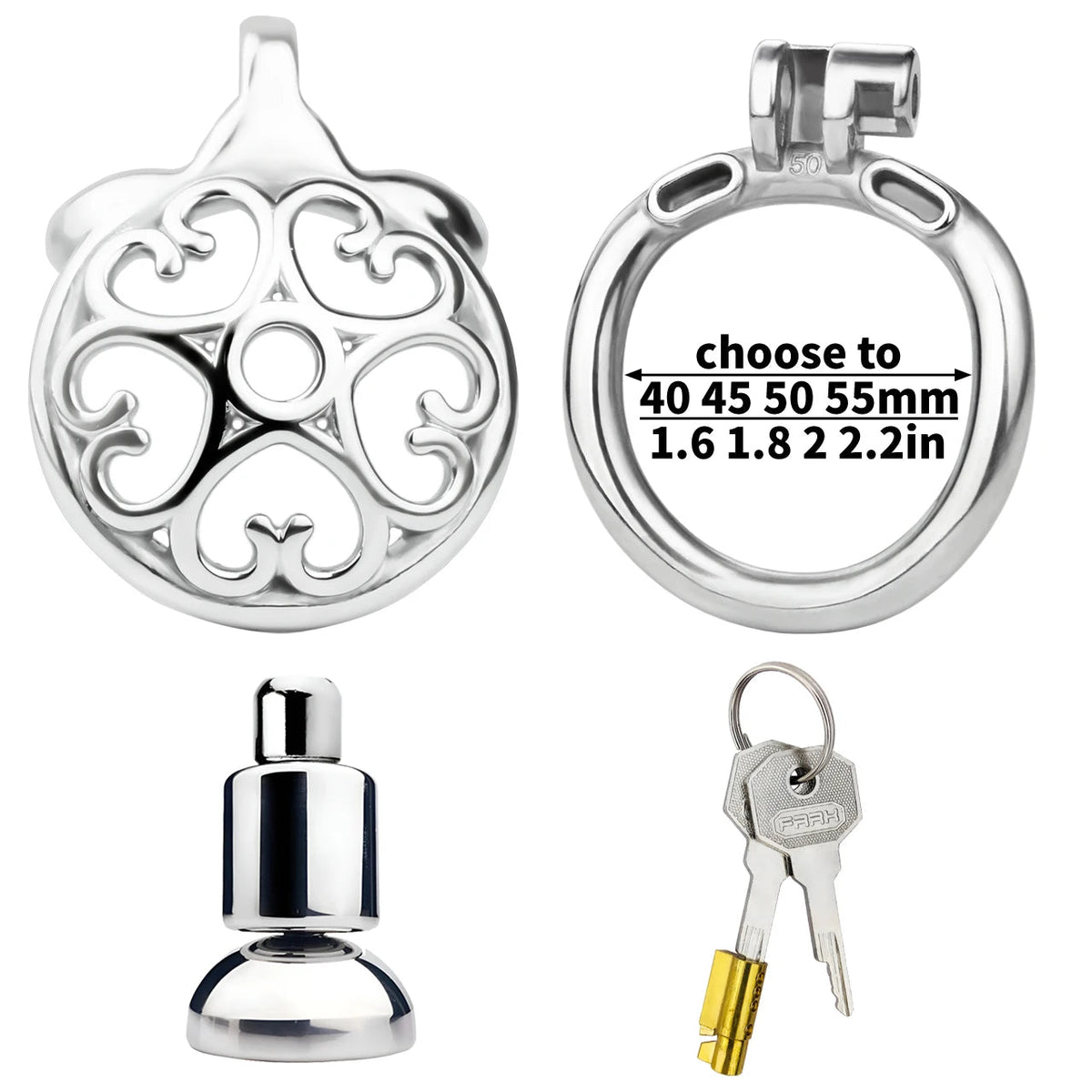
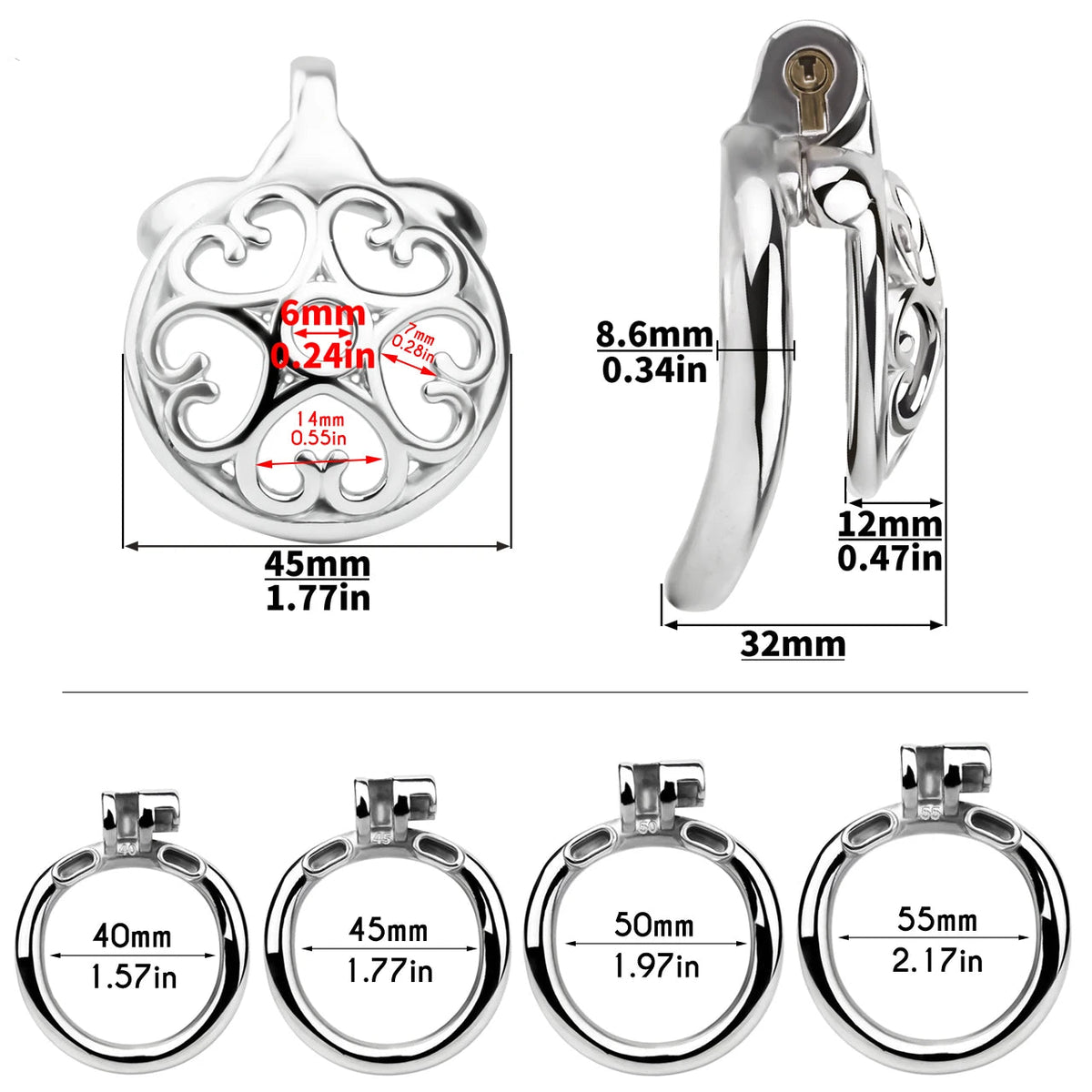
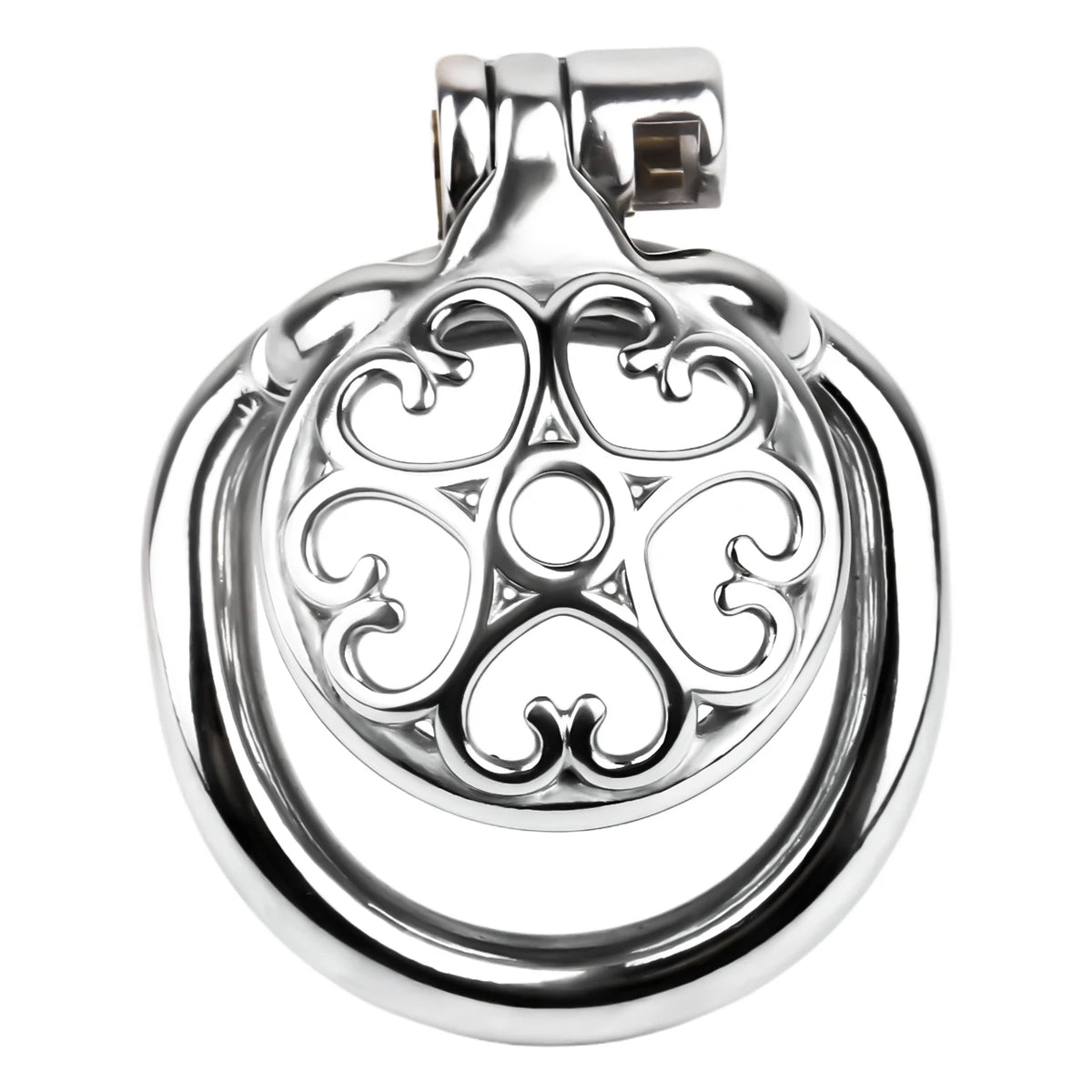
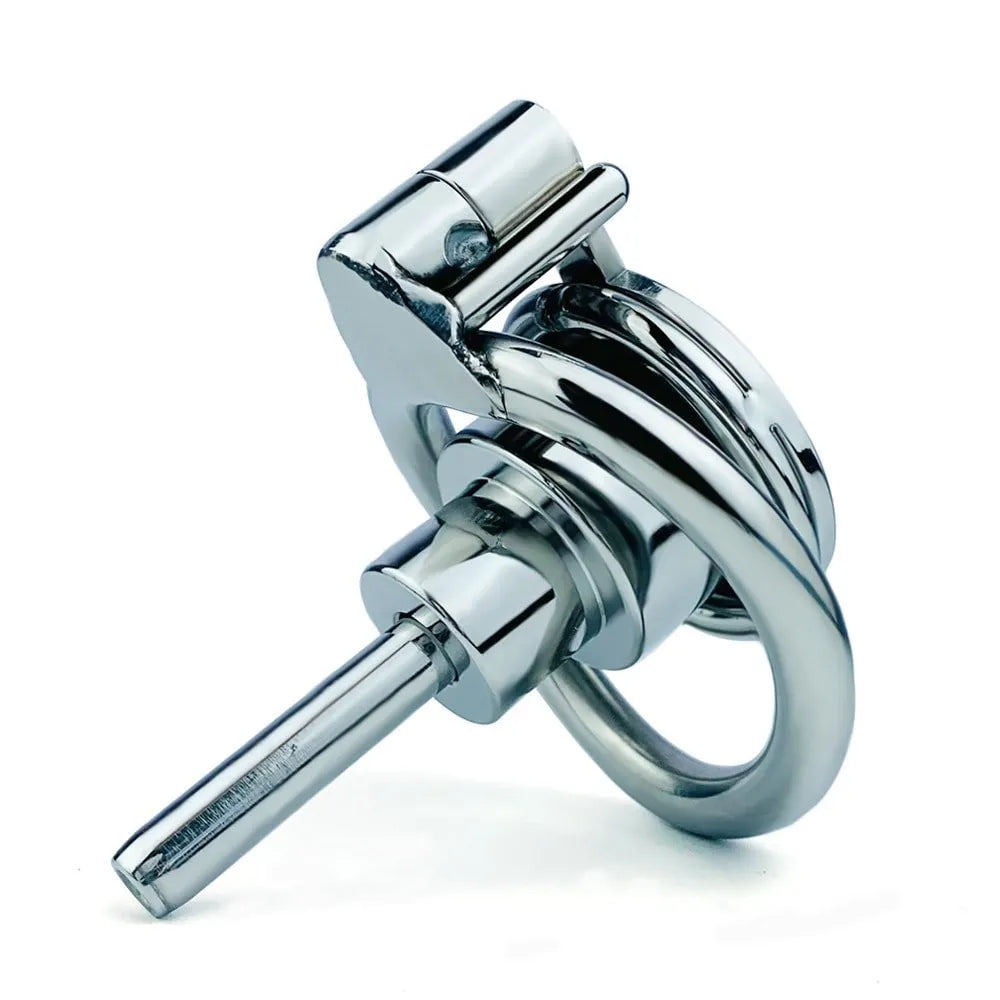
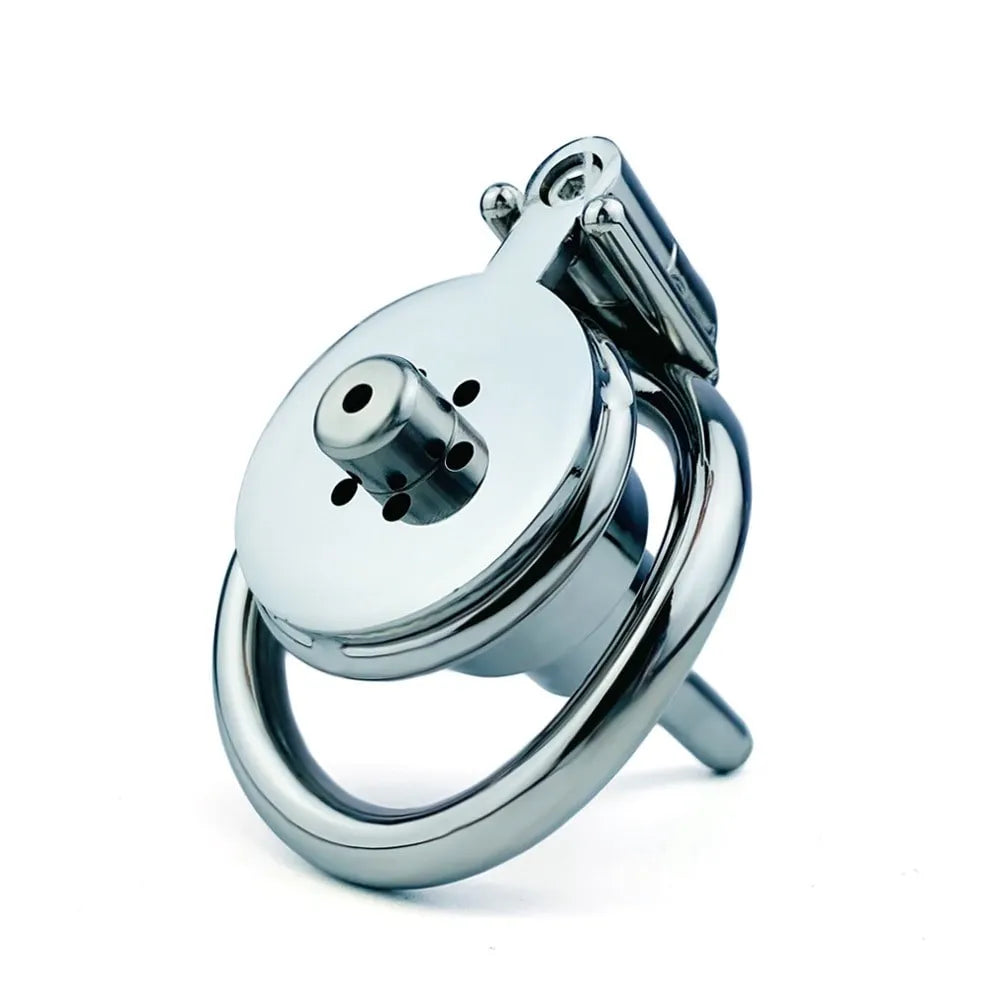
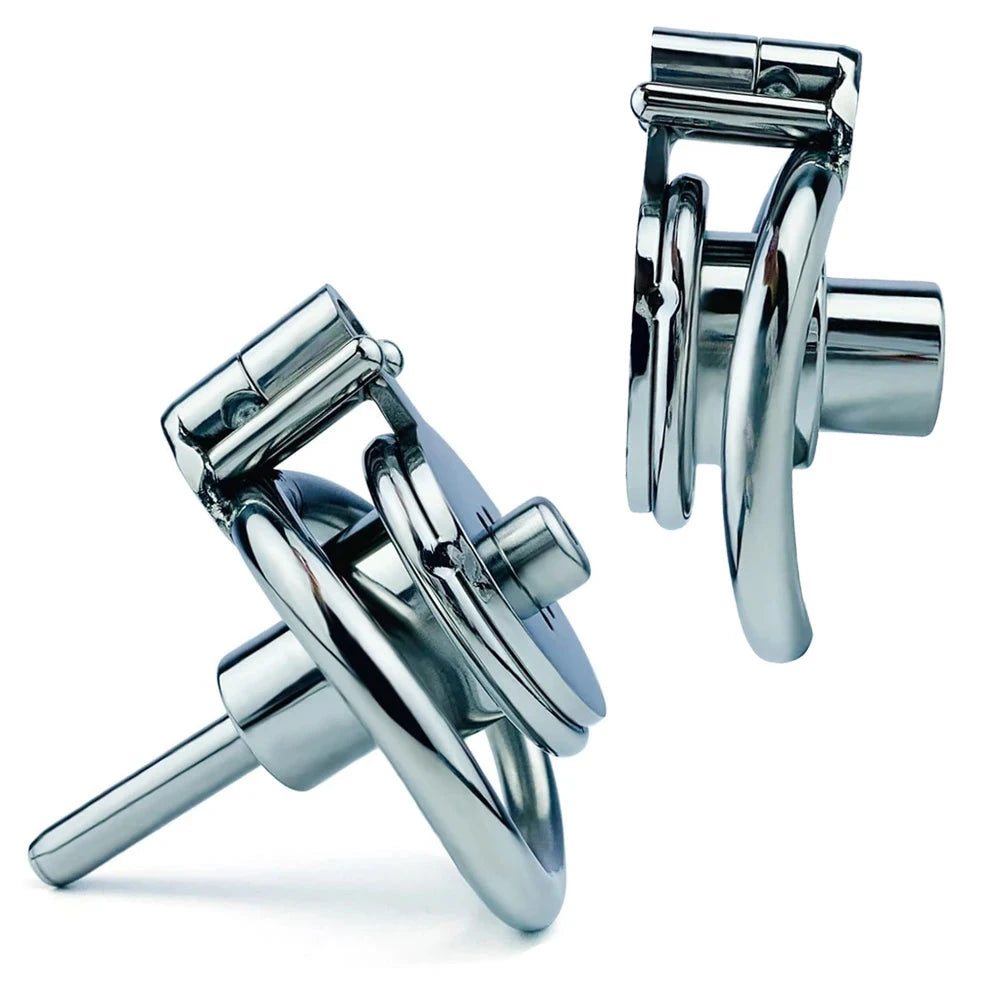
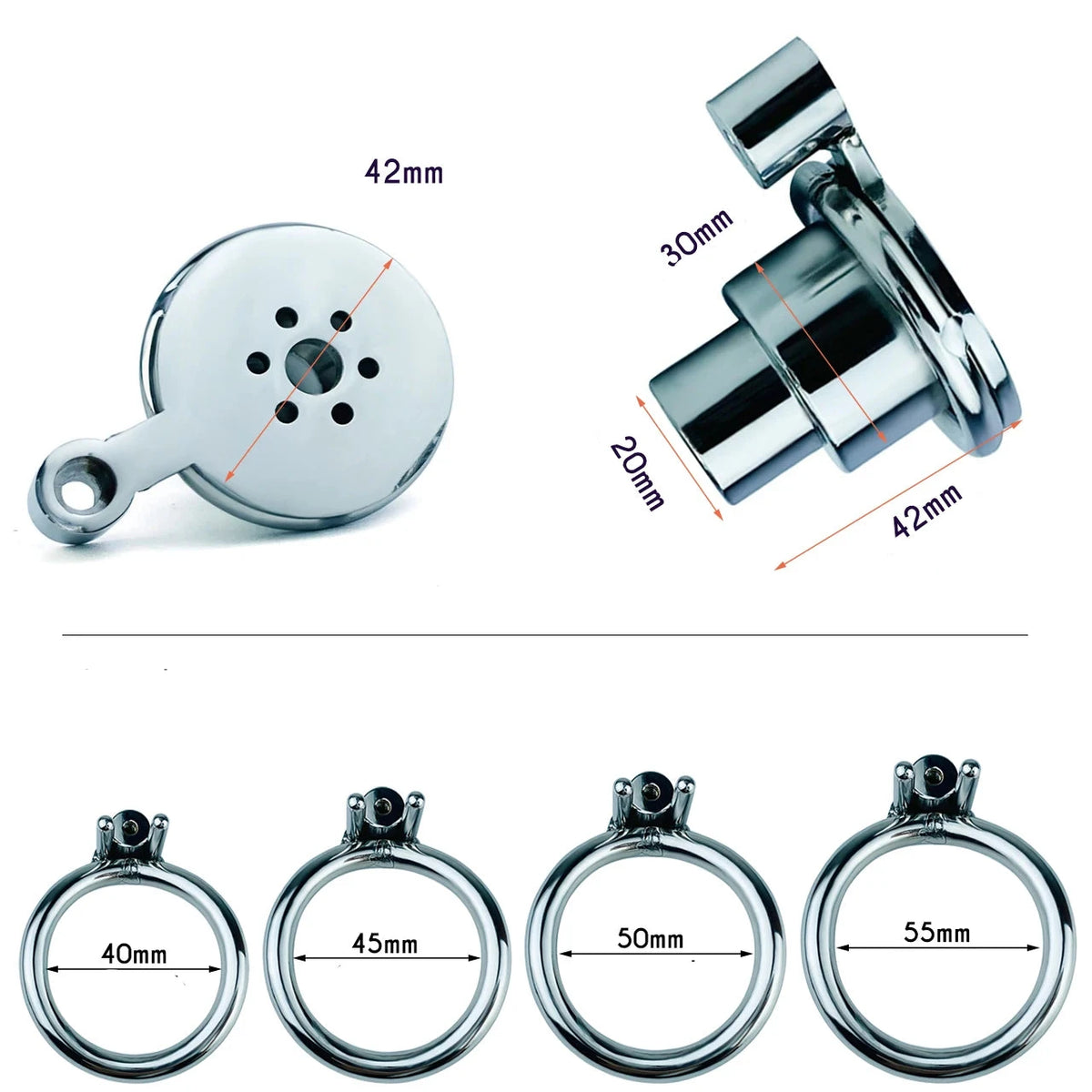
A cage is made of two parts, the base ring and the cage itself, joined by the locking system. On a product page you will therefore find three dimensions:
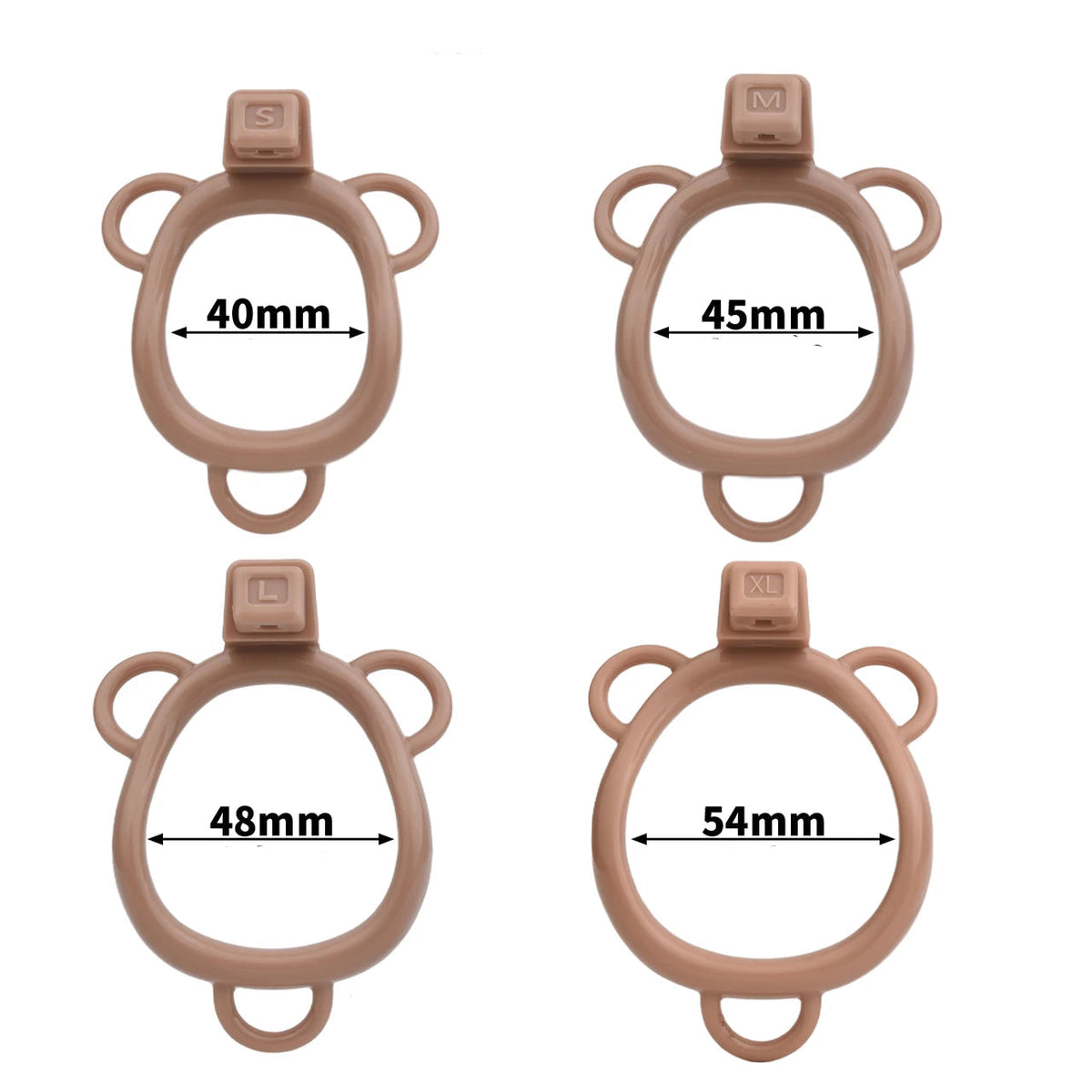
The base ring diameter, which sits behind the testicles and holds everything in place. This is the most important measurement.
The cage length, meaning the inner length of the tube that holds the penis.
The inner diameter of the cage, which corresponds to its width.
The ring goes around both the base of the penis and the testicles. To find your size, you need to measure that full loop, at rest.
Take a non-elastic piece of string or a soft tailor's tape measure.
Pass it behind the testicles and over the base of the penis, where it meets the body.
Tighten and knot it until the string is snug without compressing: it should touch the skin all the way around without digging in.
Keep it in place for five minutes. This is the comfort test: if you feel discomfort, pinching or numbness, loosen it slightly and start again. If it slips off by itself, tighten it.
Once you have found the right setting, cut the string at the knot, or mark the point where it meets, then measure its length in millimeters: this is your circumference.
Divide that figure by 3.14 to get the ring diameter.
Example: a circumference of 141 mm gives 141 ÷ 3.14 = 45 mm in diameter.
Repeat the measurement three times during the day, in the morning, at midday and in the evening, then keep the average. The body varies with temperature and activity, and a single measurement tends to overestimate the size. If you are unsure, bear in mind that 45 mm is the most common diameter.
| Measured circumference | Ring diameter | Most often found on |
|---|---|---|
| About 126 mm | 40 mm | Metal cages |
| About 132 mm | 42 mm | Resin cages |
| About 141 mm | 45 mm | Metal and resin cages |
| About 151 mm | 48 mm | Resin cages |
| About 157 mm | 50 mm | Metal cages |
| About 163 mm | 52 mm | Resin cages |
| About 173 mm | 55 mm | Metal cages |
Choose the ring whose diameter is closest to your result. Once the cage arrives, the most reliable test is still the finger test: you should be able to slide one finger between the ring and your body, but no more.
Length is always measured at rest, never erect: a chastity cage holds the flaccid penis and is precisely what prevents an erection from developing.
Stand upright with your back straight, in a room at normal temperature.
Place a ruler on top of the penis, pressed against the pubic bone.
Note the length to the tip of the glans.
Repeat at several times of day and keep the most frequent value.
The rule to remember: choose a cage equal to or slightly shorter than your length at rest, by 6 to 13 mm. A slightly short cage holds better and limits rubbing. A cage that is too long leaves an empty space into which the penis retracts, which encourages slippage and pinching.
| Length at rest | Recommended cage length | Type of cage |
|---|---|---|
| Under 40 mm | 15 to 30 mm | Flat, inverted or tiny cage |
| 40 to 60 mm | 30 to 50 mm | Tiny cage |
| 60 to 80 mm | 50 to 70 mm | Short to standard cage |
| 80 to 100 mm | 70 to 90 mm | Standard cage |
| Over 100 mm | 90 mm and more | Long cage |
These guidelines are indicative: always rely on the dimensions given on the page of the model you choose. For the shortest lengths, tiny chastity cages and flat chastity cages are designed specifically for these proportions.
This is the most forgiving of the three measurements. To find it, measure the circumference of the penis at rest, halfway along, then divide by 3.14. The inner diameter of the cage should be close to that result or a few millimeters larger. Too narrow, and it compresses constantly. Too wide, and it lets the penis move and rub against the walls.
The answer depends on the part in question:
For the cage length, take the shorter one. The hold will be better and the risk of slippage lower.
For the ring, start with the larger of the two, then go down a size if the cage slips. A ring that is too tight is the only fit problem that raises a real safety concern.
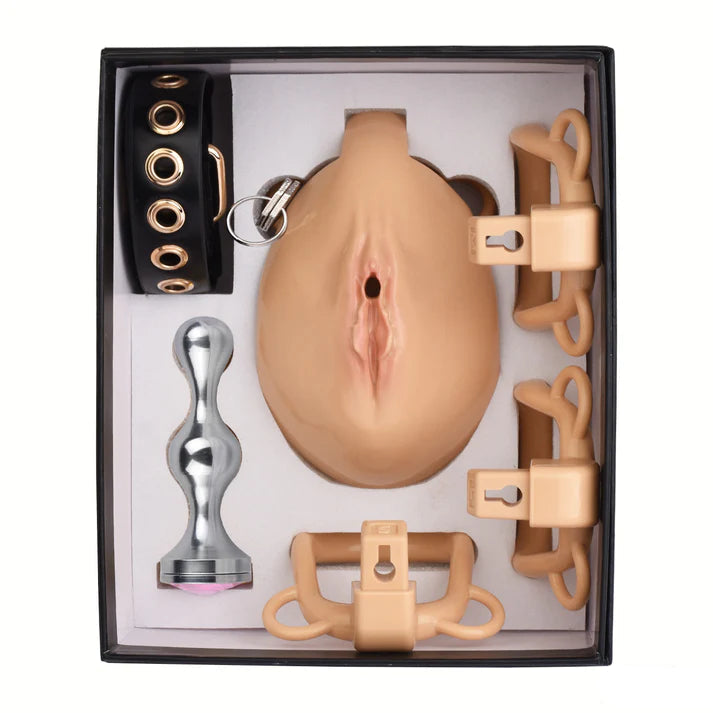
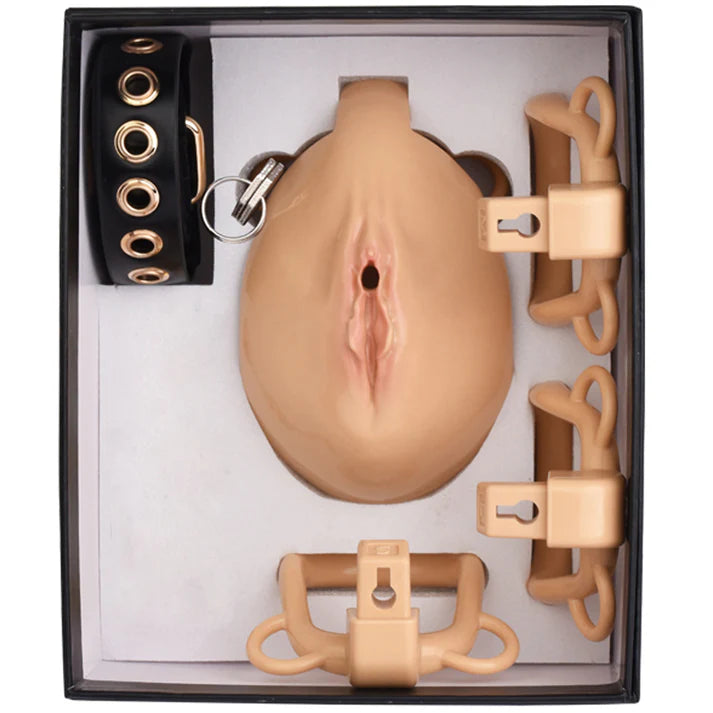
This is why many cages come with several rings: you try them, compare them, and keep the one that fits. If your model only offers one, rings sold separately let you adjust the size without changing the cage.

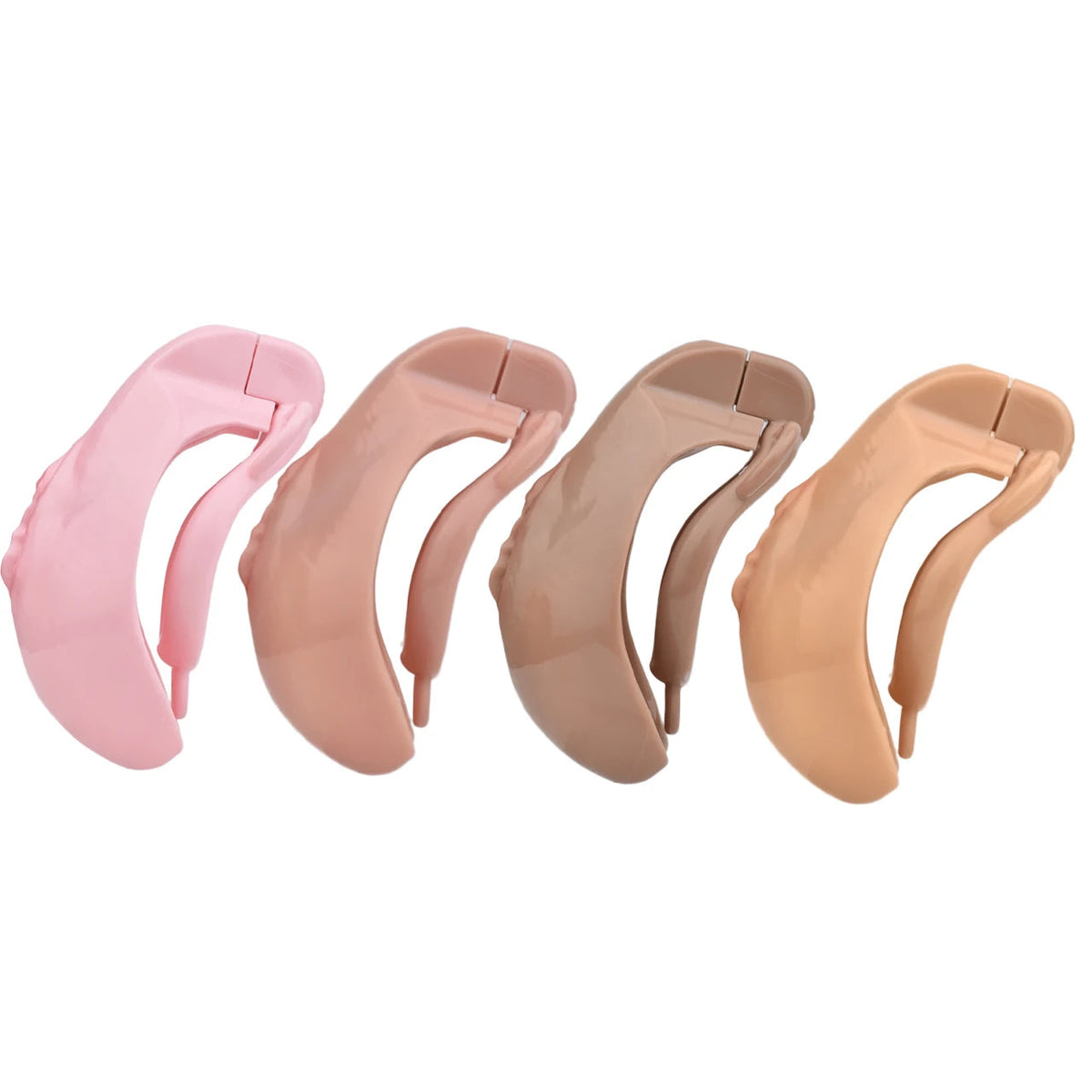
At the same diameter, a round ring and a curved ring do not wear the same way. The curved, so-called ergonomic ring follows the shape of the body and reduces pressure under the testicles, which makes it more comfortable over time. The gap between the ring and the cage also plays a part: too wide, and a testicle can slip through; too narrow, and it pinches the skin.
Your body quickly tells you whether the fit is right. Here is how to interpret what you feel:
Ring too tight: a red mark that lingers after removal, a cold sensation, numbness, skin turning purplish or very pale. In that case, remove the cage right away and move up a size.
Ring too loose: a testicle slipping out, a cage that hangs or slides forward, removal possible without the key.
Cage too long: the glans does not reach the end, the penis retracts out of the tube, the skin gets pinched at the base.
Cage too short or too narrow: constant pressure on the glans, even at rest.
Mild discomfort during nighttime erections is normal for the first few days. Sharp or persistent pain never is.
Do not judge a size on the first ten minutes. Start by wearing the cage for a few hours during the day, for three to five days, before keeping it on at night: it is during sleep that the ring fit is tested the most. Our guide to putting on a chastity cage explains fitting step by step, and the one on how long to wear it explains how to increase gradually.
With habit, changing size is common. Many wearers move to a shorter cage after a few weeks, once the body has adapted. Once you have found your size, our complete guide to choosing your chastity cage will help you settle the other criteria: material, security level and design.
Finding your chastity cage size comes down to three steps: knot a piece of string behind the testicles, keep it on for five minutes, then divide its length by 3.14 for the ring, measure your length at rest and subtract 6 to 13 mm for the cage, then check the fit with the finger test. When in doubt, take a shorter cage and a slightly larger ring, and give yourself a few days to confirm.
The right size changes everything… the Plaisir & Chasteté team is here to help you find yours.
Knot a non-elastic piece of string behind the testicles and over the base of the penis, at rest, and keep it on for five minutes to check that it stays comfortable. Cut it, measure its length in millimeters and divide by 3.14: this gives you the ring diameter. Repeat the measurement three times during the day and keep the average.
The 45 mm diameter is the most widespread. Standard sizes generally range from 40 to 55 mm, in steps of 3 to 5 mm depending on the model.
No, the measurement is always taken at rest. A chastity cage holds the flaccid penis: choose a length equal to or slightly shorter, by 6 to 13 mm, than your length at rest.
For the cage length, take the shorter one. For the ring, start with the larger of the two, then go down a size if the cage slips or a testicle slips out.
A red mark that lingers, a cold sensation, numbness or skin changing color all point to a ring that is too tight. Remove the cage and move up a size. A well-fitted ring lets one finger pass between the ring and the body.
Yes, it is even common. After a few weeks of wear, many wearers move to a shorter cage, because the body adapts and the penis takes up less space at rest.
At Plaisir & Chasteté, we provide you with all our expertise to offer you chastity cages that meet all needs, desires, and fantasies.