Cart
Your cart is empty

The relationship between testosterone and the practice of chastity is both a complex and stimulating subject. In this article, I will attempt to navigate between scientific data, plausible hypotheses, and my own reflective perspective to shed light on this connection — or its absence — in a coherent and nuanced way. My intention is not to deliver a purely mechanical text, but to open a discussion, to spark reflection, to present what we know, what remains uncertain, and how the concept of chastity can engage in dialogue with testosterone levels.
Before diving into the relationship with chastity, it is essential to recall what testosterone is, how it works, and what its main physiological influences are.
Testosterone is a steroid hormone primarily produced in the testes (in men) and, to a lesser extent, in the adrenal glands. It plays a central role in the development of secondary sexual characteristics (muscle mass, body hair, voice, etc.), in the regulation of libido, mood, energy and metabolism.
Here are some effects commonly associated with high or optimal testosterone levels:
Maintenance of muscle mass and bone density
Vitality, general energy
Libido and sexual desire
Influence on mood (motivation, confidence)
Partial regulation of metabolism (fats, lipids, body composition)
Testosterone is not a "magic key" to desire, nor an autonomous force that necessarily determines sexual behavior. It interacts with the brain, hormonal receptors, psychological inhibitors and cultural constraints.
When we talk about chastity here, there is no need to revisit religious or moral definitions: we all know this is not a matter of "purity" but of choice, of framework, sometimes of play. Chastity is not strict continence, it is not reduced to the total absence of sex. It is above all a way of directing desire, of confining it, of holding it back, in order to play with it or sublimate it more fully.
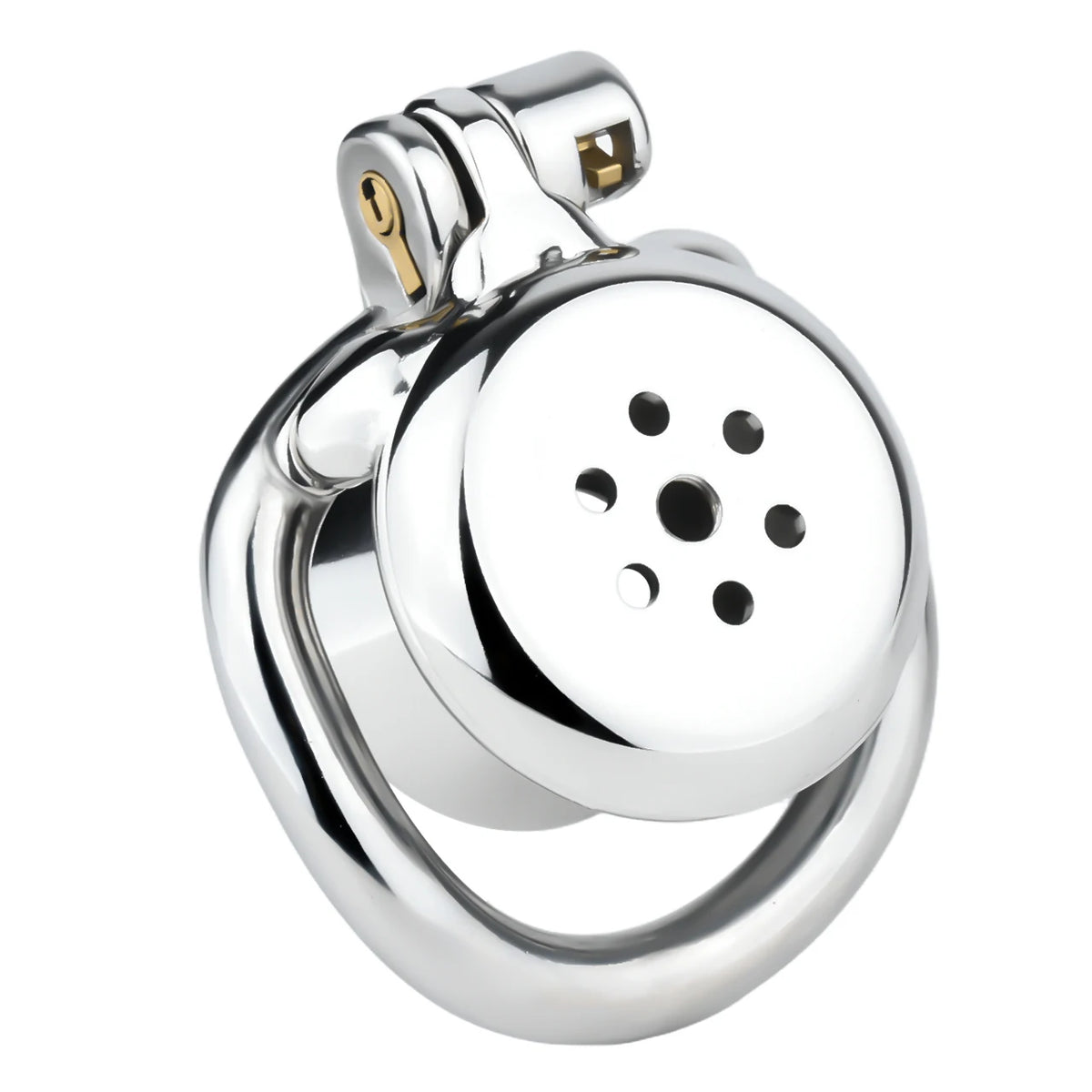
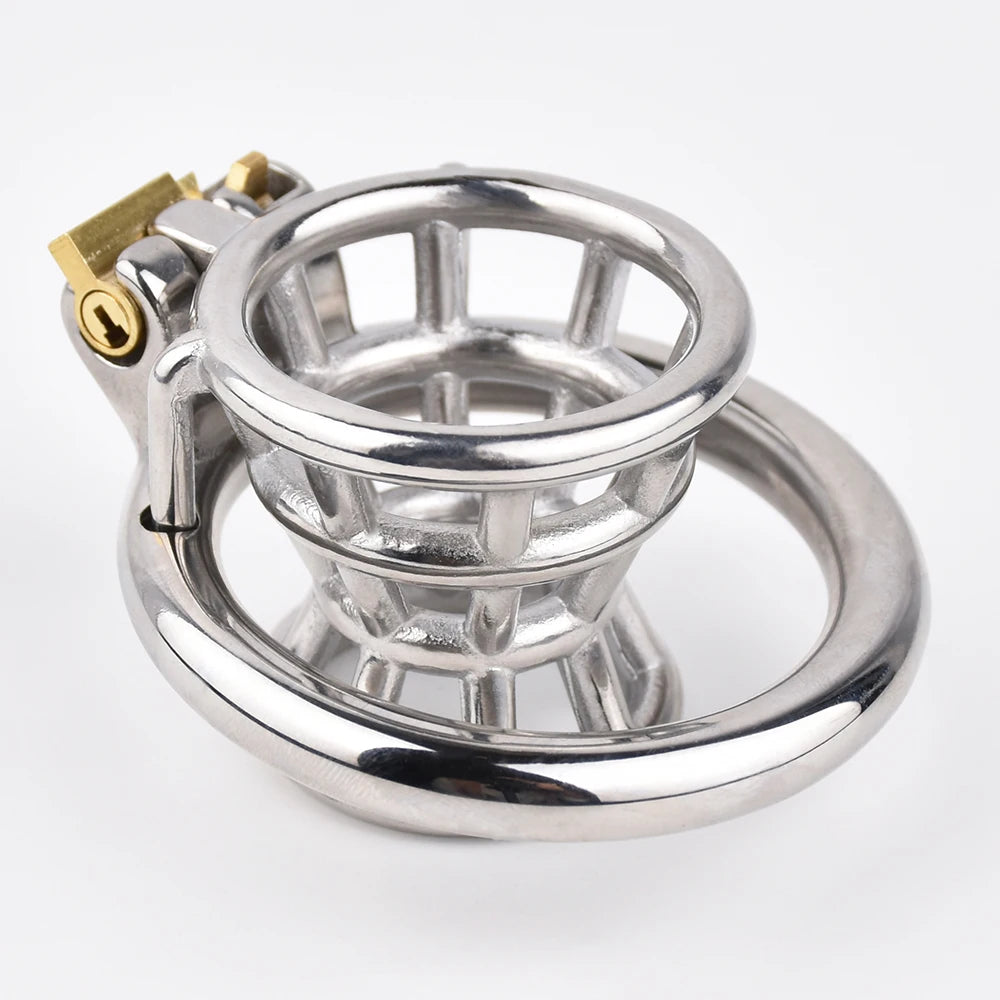
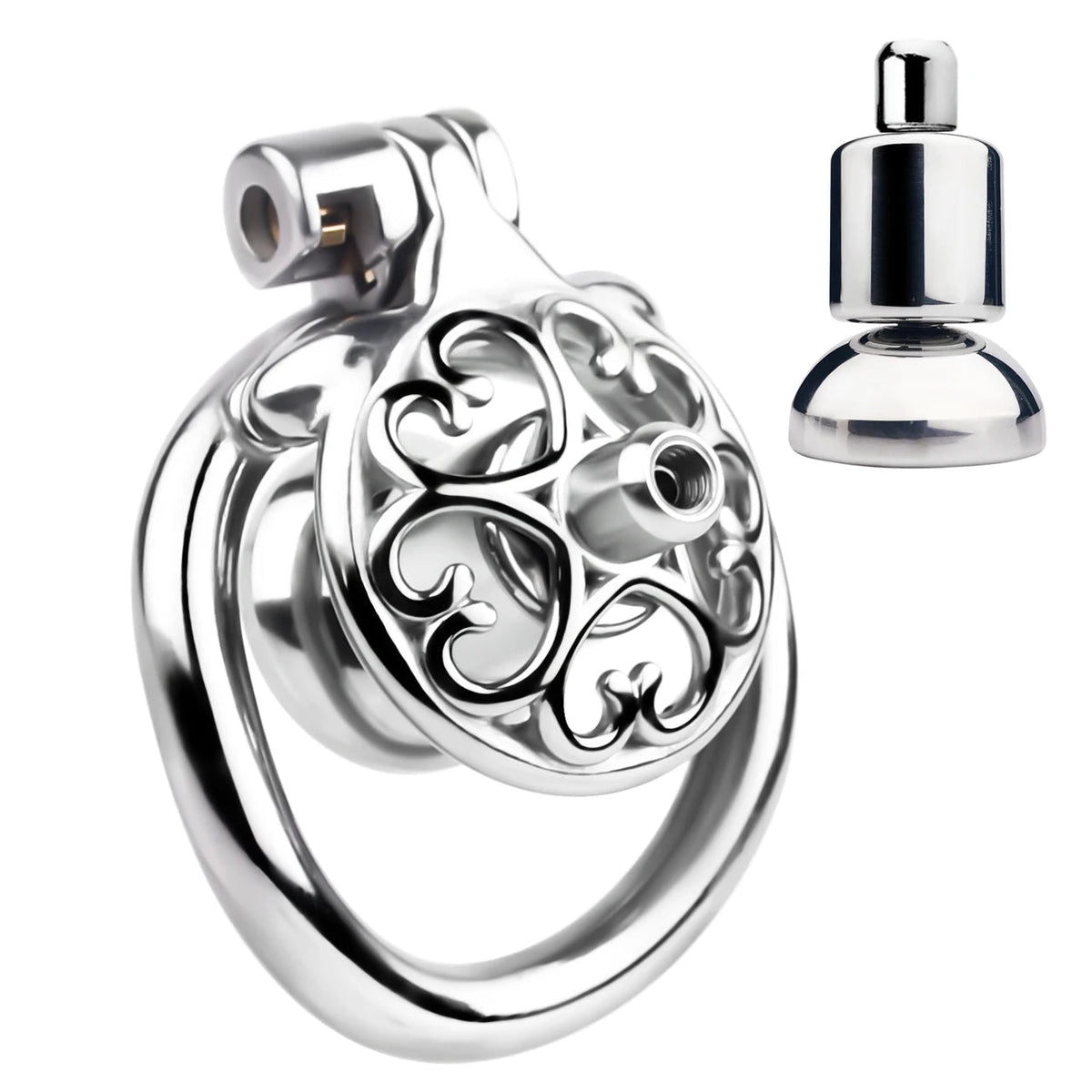
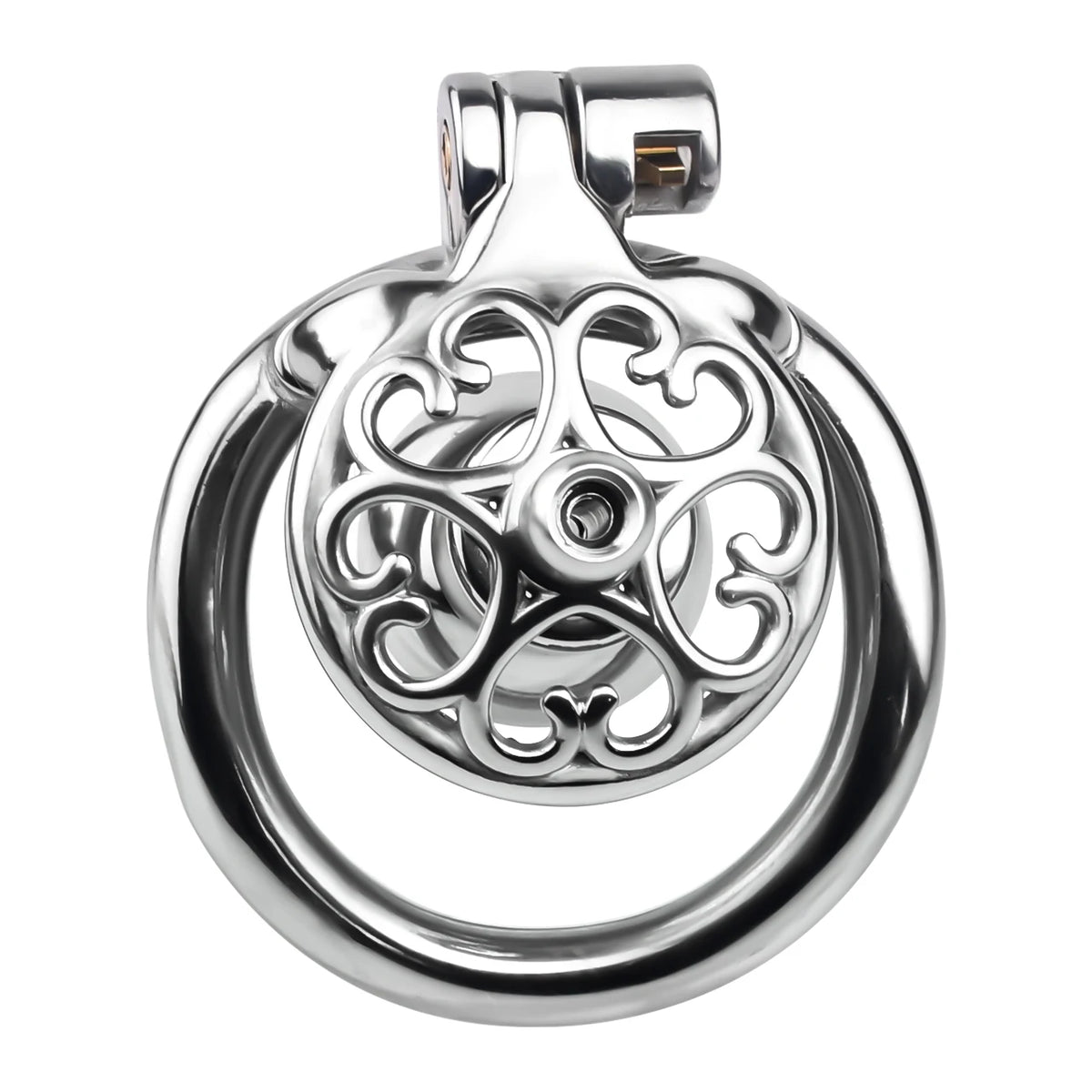
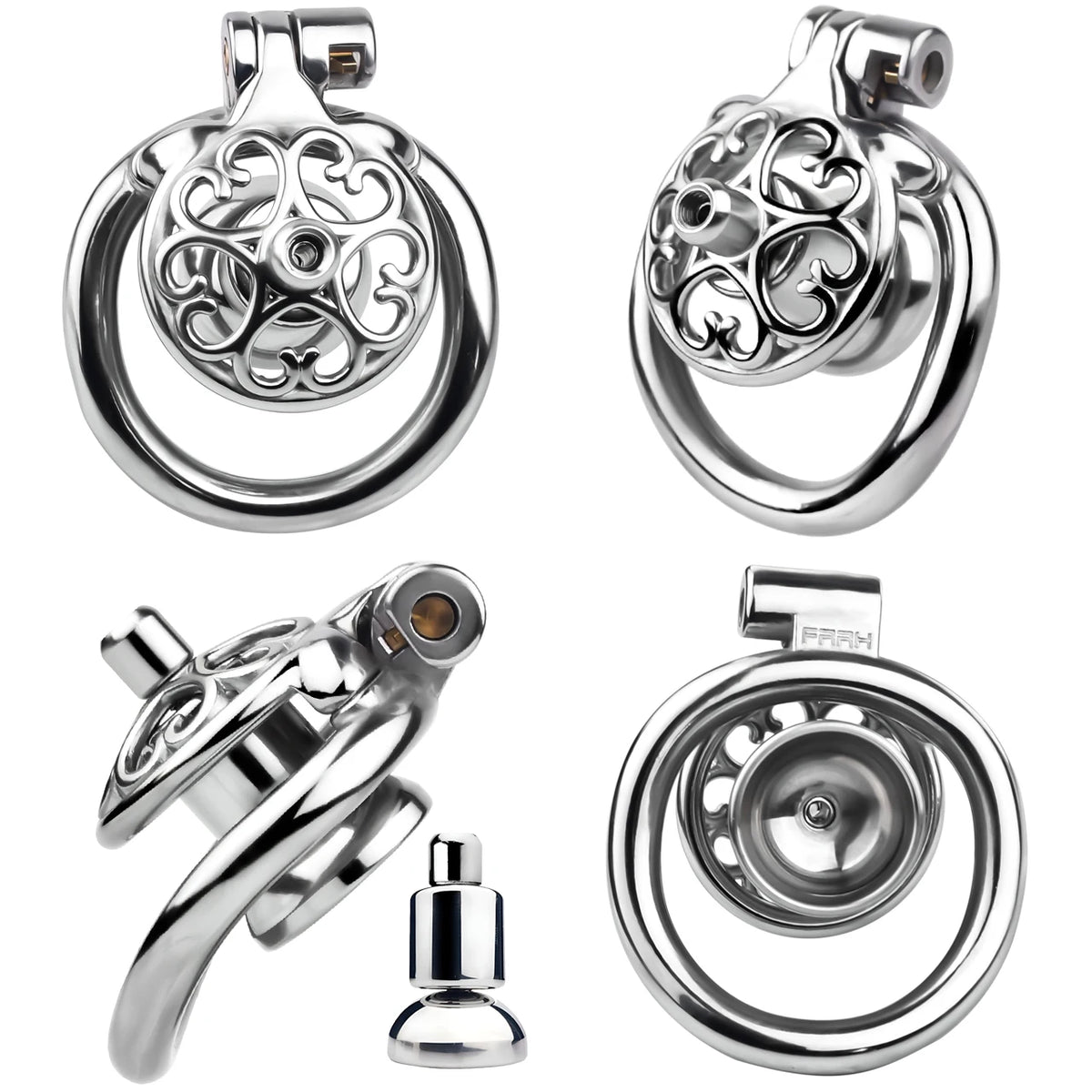
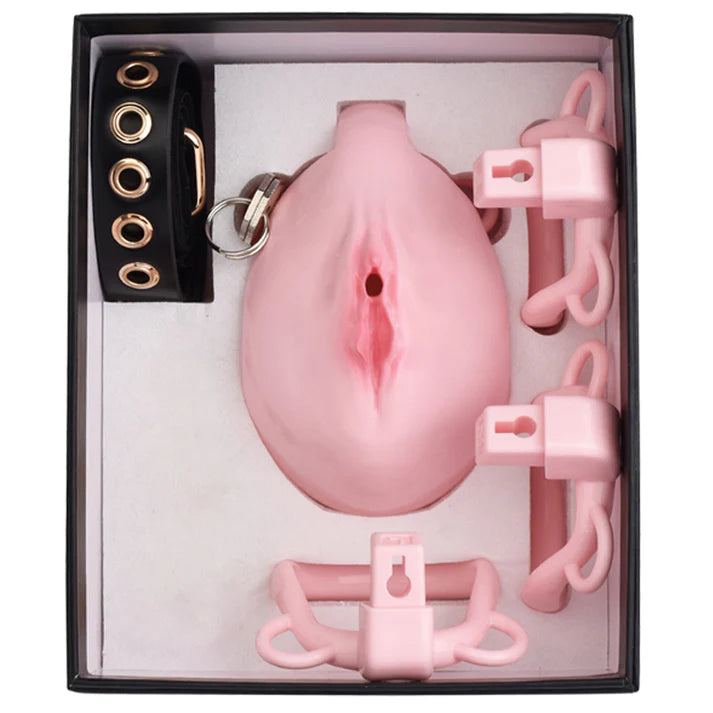
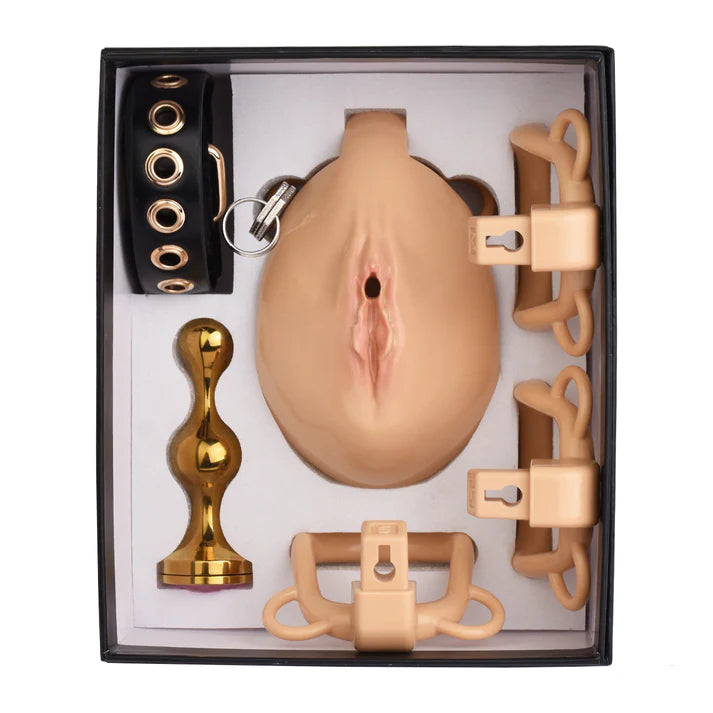
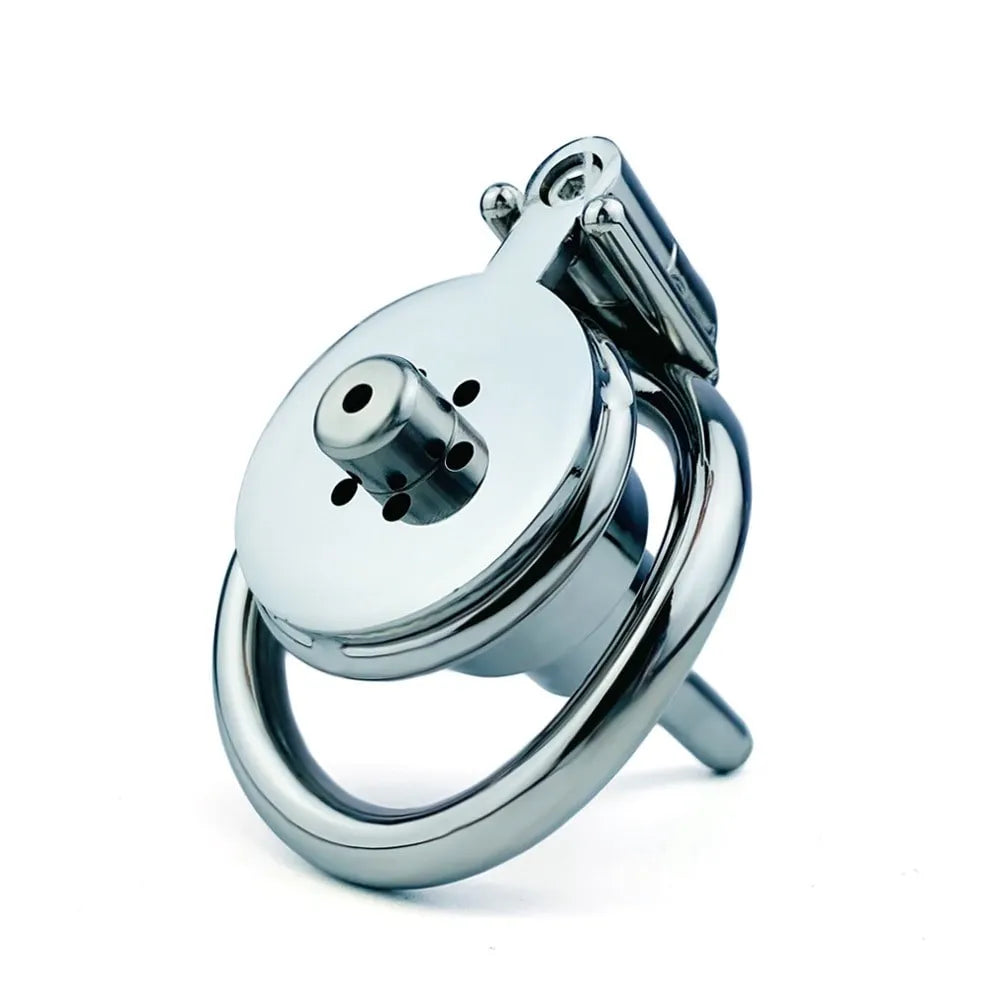
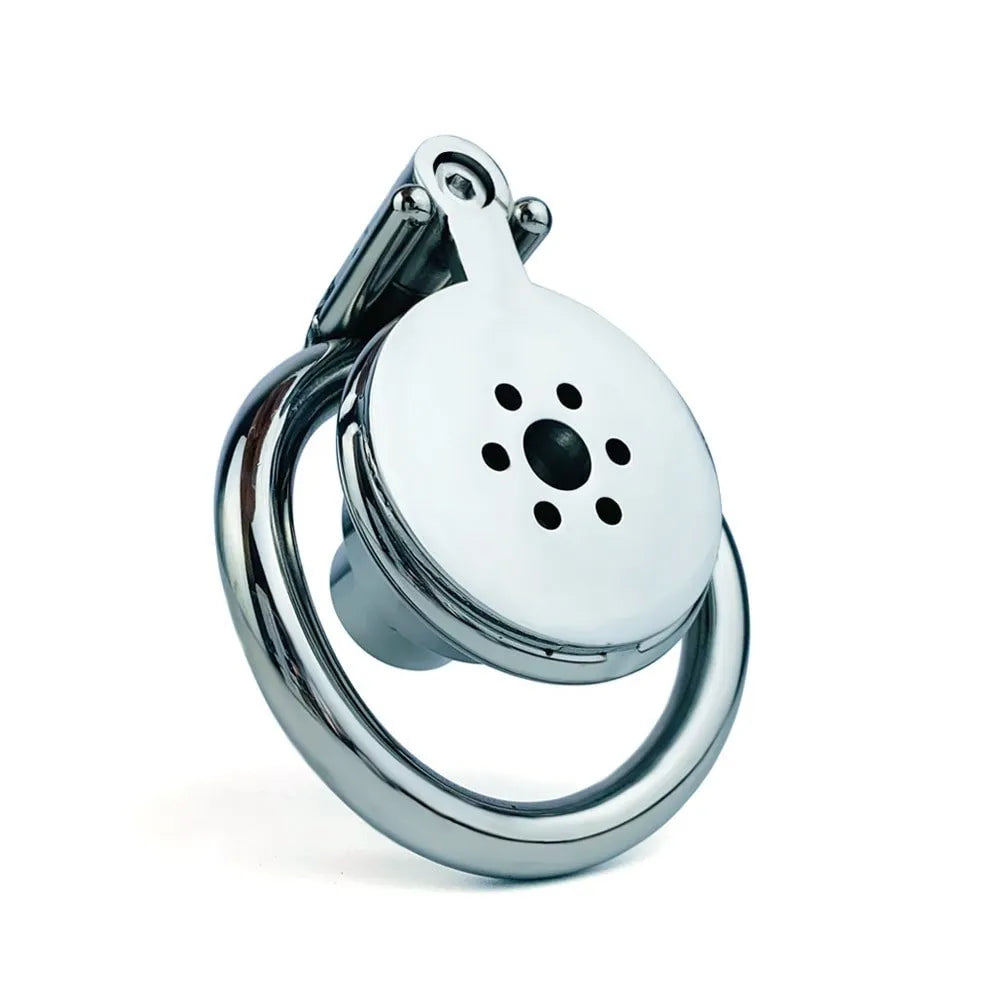
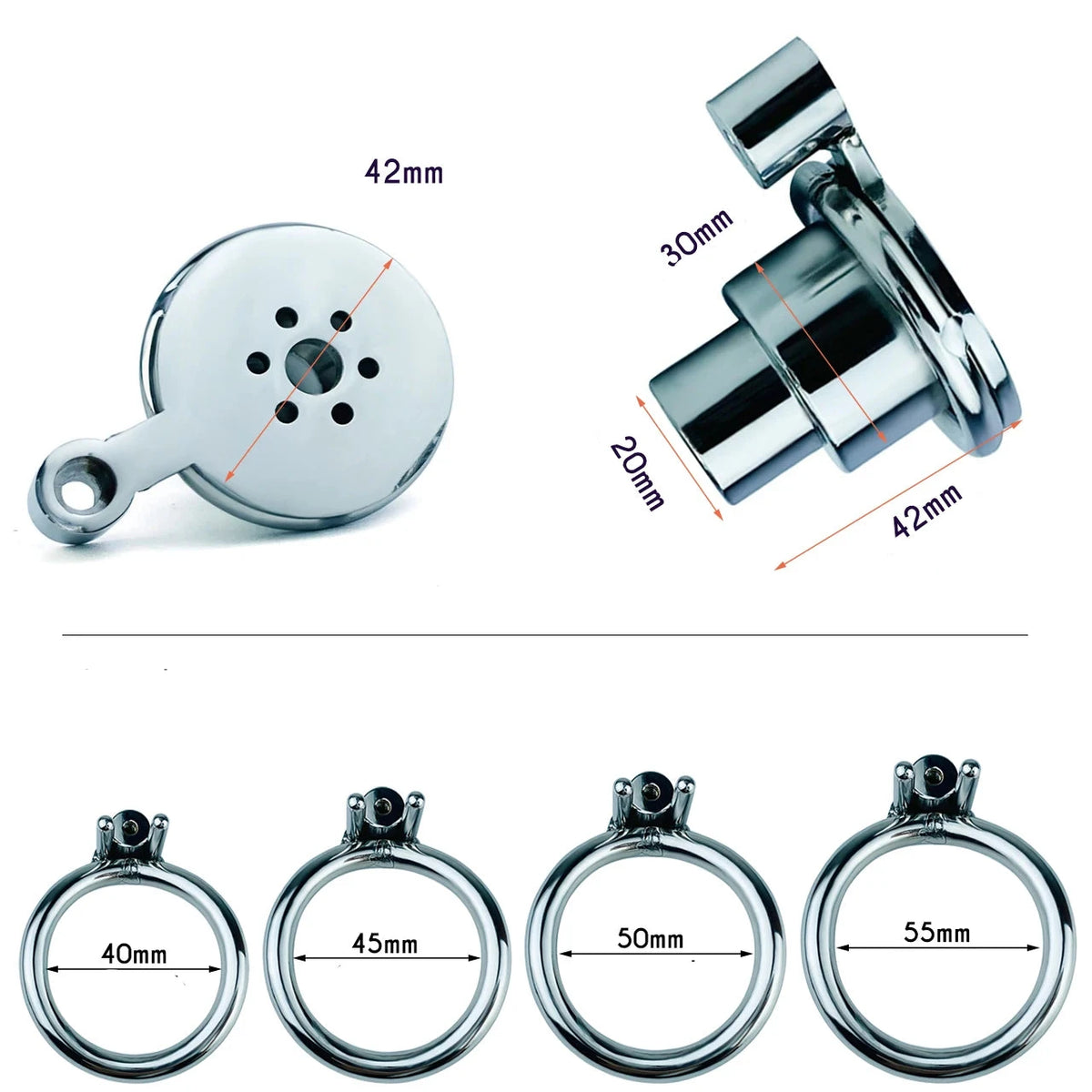
In the BDSM universe, the chastity cage is not a simple accessory — it is a psychological key. It blocks, it forbids, but above all, it transforms. The wearer knows they will not be able to yield to the most immediate impulse. Every thwarted erection, every moment of frustration feeds a tension that never fully dies out.

This is what makes the experience unique: the cage acts on both the body and the mind. There is the material aspect — the penis enclosed, deprived of freedom — but above all, there is the psychological dimension. Being in a cage means accepting that desire prolongs itself, amplifies itself, and settles as a backdrop to everyday life. Chastity then becomes a state of permanent alertness, where one renounces immediacy to taste a different kind of intensity.
It is tempting to look for a direct correlation — "more chastity, more testosterone" — but reality appears more subtle. Here is what the literature suggests, with caution.
A few studies explore the effect of sexual abstinence — or sexual activity — on hormonal levels.
For example, a pilot study examined the effect of one week of "sexual reserve" on athletes in combat sports. It showed mixed results, with no uniform trend, but suggests that testosterone could be "positively affected" during sexual restraint.
This hypothesis is partly based on the idea that the sexual act and ejaculation consume energy, and that "reserve" could leave more resources to stimulate hormonal production. But the results of studies are weak, very limited in sample size, and difficult to generalize.
An interesting study shows that men with high testosterone levels tend to have higher scores in "sexual compulsivity" (i.e., difficulty restraining their impulses), while a high level of discipline counterbalances this risk.
In other words: testosterone can amplify impulses, but it is not a condemnation — personal control and psychological inhibitors play a decisive role in the expression or channeling of desire.
Articles report that the administration of testosterone supplements can increase sexual impulsivity in some men. For example, an article indicates that supplements increase impulsive sexual behaviors.
This suggests that when testosterone exceeds a certain threshold, it can reduce psychological "inhibitions" and foster urgency. This is not surprising if one accepts that the hormone acts as a lever, but that the direction (mastery or excess) depends on the mental, emotional and cultural context.
Outside the chastity/testosterone link, a related factor is diet: a meta-analysis shows that a low-fat diet can lead to a modest decrease in total and free testosterone.
This serves as a reminder that, even within a chastity practice, other levers (nutrition, sleep, stress) strongly modulate hormonal levels.
Samples in abstinence studies are often small.
The concept of "chastity" is rarely defined in biomedical studies — researchers tend to speak of "sexual abstinence" or generalized "sexual activity."
Psychological variables (desire, inhibition, context) are difficult to isolate.
Results are often contradictory or show no clear effect.
The conclusion: there is no solid evidence that chastity "increases testosterone in a lasting and significant way."
Rather than promising a spectacular hormonal increase, I prefer to formulate a more plausible hypothesis — one that strikes me as more interesting: chastity can be a channeling tool for testosterone, that is, a way of redirecting the energy of raw desire toward other forms of creativity, discipline, concentration and purpose.
If you wear a chastity cage, it does not guarantee that your hormonal levels will skyrocket — but it does change the way you experience your desire. Unexpressed desire can be transformed into tension, concentration, anticipation, and productive energy. The "flow" of the impulse changes, rather than its quantity.
Some practitioners affirm: "the chastity cage allows testosterone to be channeled without reducing it."
This idea strikes me as more coherent: the goal is not to short-circuit the body's chemistry, but to interact with it — to use it as an inner engine.
Physical activity, muscular effort: an excess of unreleased desire can transform into physical tension. Targeted training can "receive" this energy.
Creativity, art, writing, intellectual work: the "excess" of impulse can nourish depth and expression.
Meditation, introspection, reading, spirituality: giving meaning to restraint, inscribing it within a project of mastery.
Discipline of attention: focusing on the present moment, on breathing, on bodily awareness, rather than on the consumption of desire.
This approach transforms chastity into a path, not an arbitrary constraint.
This channeling of desire could be compared to a true alchemical transmutation. In ancient imagination, the alchemist was not merely seeking to turn lead into gold, but to convert raw matter into a nobler, more luminous substance. Chastity works in much the same way: sexual energy, instead of being discharged in the moment, condenses, refines and transforms. It is no longer a simple animal impulse, but a force available for creation, discipline and inner elevation.
The cage then becomes the athanor, that symbolic furnace where the raw material — desire — is held back in order to be worked upon, sublimated. This intimate transmutation does not necessarily increase testosterone in numbers, but it modifies the perceived quality of energy. Deferred pleasure becomes an engine that fuels not only arousal, but also willpower, concentration and, sometimes, a form of spiritual acuity.
As someone well-versed in this subject, I must point out the limits, risks and possible traps.
Chastity must not become a morbid obsession, a source of guilt, extreme frustration or inner dissonance. If the tension becomes unbearable, desire "explodes" in a destabilizing way. One must know how to set limits on duration and intensity, and remain attuned to oneself.
If chastity leads to chronic frustration, prolonged stress, or a psychologically driven drop in libido, this could, indirectly, weigh on the hormonal axis (testosterone, cortisol, etc.). Chronic stress is harmful to sex hormones. One must pay attention to sleep, nutrition and mental recovery.
It is tempting to believe that "the more I hold back, the more powerful I become, the more testosterone I have." This is a trap. The deepest gains often come from inner work, not from chasing hormonal performance.
Allow me to enter into a more subjective reflection, nourished by my own sensibility.
Testosterone embodies a certain virility — strength, desire, appetite — while chastity imposes restraint, the "no," control. These are two apparently opposing poles. Yet I perceive that it is precisely in the union of these poles that a form of virile maturity resides: knowing how to be impulse, while also being capable of silence and discipline.
Chastity is not the abandonment of desire: it is the act of governing it, of not letting it govern you. It is a way of restoring inner sovereignty.
When desire has no barrier, it demands satisfaction. But chastity can transform this "need" into a "calling": desire persists, pulses, but it becomes "deferred" energy — meditated, invested. It rises from "I want it now" to "I can wait, I can choose."
Chastity, in this context, is not the enemy of pleasure, but its paradoxical ally. Deferred pleasure — anticipation, imagination, held-back tension — becomes richer, deeper, more mysterious. The body "forgets" in the immediate, but the psyche preserves the breath of desire.
Ultimately, practicing chastity — voluntarily, generously — is an act of affirmation: I choose my relationship to my sexuality. I do not let myself be dominated by instinct; I remain, within the tension, a creator of my being, an explorer of my desire.
This is why I do not believe in discourses that promise "more testosterone" as an automatic effect. I believe in inner transformations, in discipline, in attention. If testosterone can be an ally — and I believe this is possible — it will never be the master: it is up to us to write the relationship.
For those who wish to explore this path, here are a few concrete suggestions to keep in mind:
Set a reasonable duration
Start with a goal of a few days to a few weeks. Do not aim for an extreme period right from the start.
Plan an "exit strategy" or a "relay pause"
In case of unbearable tension, have a controlled release strategy in place so as not to tip into destructive frustration.
Accompany with a complementary practice
Sport, meditation, art, creation — something that will "receive" the unexpressed sexual energy.
Monitor sleep, nutrition and stress
To preserve hormonal balance and psychological stability.
Write down your feelings
Personal journal, self-observation: note the changes, the tensions, the inner transformations.
Communicate if in a relationship
If chastity is shared (or imposed), clear dialogue, respected boundaries and mutual consent are essential.
Be humble about results
Do not demand that a hormonal miracle occur. Observe, accept, adjust.
Testosterone and chastity are not two incompatible notions — but the link between them is neither straightforward nor automatic. The idea that "chastity = hormonal explosion" belongs more to myth than to rigorous science.
What we believe at Plaisir & Chasteté is to see chastity not as a purely constraining instrument, but as an invitation to experience the power of transformed desire, to live a conscious virility, to cultivate the inner relationship between impulse and choice.
Through chastity, one can rediscover our power of restraint, of channeling, of creation. And if, along this path, testosterone plays a role, it will be as a silent engine — not as a tyrant.
The evidence remains limited and variable. Chastity does not guarantee a lasting rise in testosterone, but it can change the way you experience desire: more anticipation, productive tension and concentration.
Many wearers notice a "shift" within just a few days. To test the impact on mood, discipline and creativity, aim for short cycles (1–2 weeks) and adjust according to your comfort and goals.
It is a metaphor: instead of discharging energy immediately, you refine it. The cage acts as the symbolic athanor where raw impulse becomes fuel for training, intellectual work, art or meditative practice.
Avoid excessive frustration, obsession and lack of communication in a relationship. Monitor sleep, stress and intimate hygiene. If discomfort persists, shorten the duration or take a break.
The winning trio: regular physical activity, creation (writing, music, projects), and mindfulness practices (breathing, meditation). These levers absorb and transform the energy of restrained desire.
At Plaisir & Chasteté, we provide you with all our expertise to offer you chastity cages that meet all needs, desires, and fantasies.